itstargetnews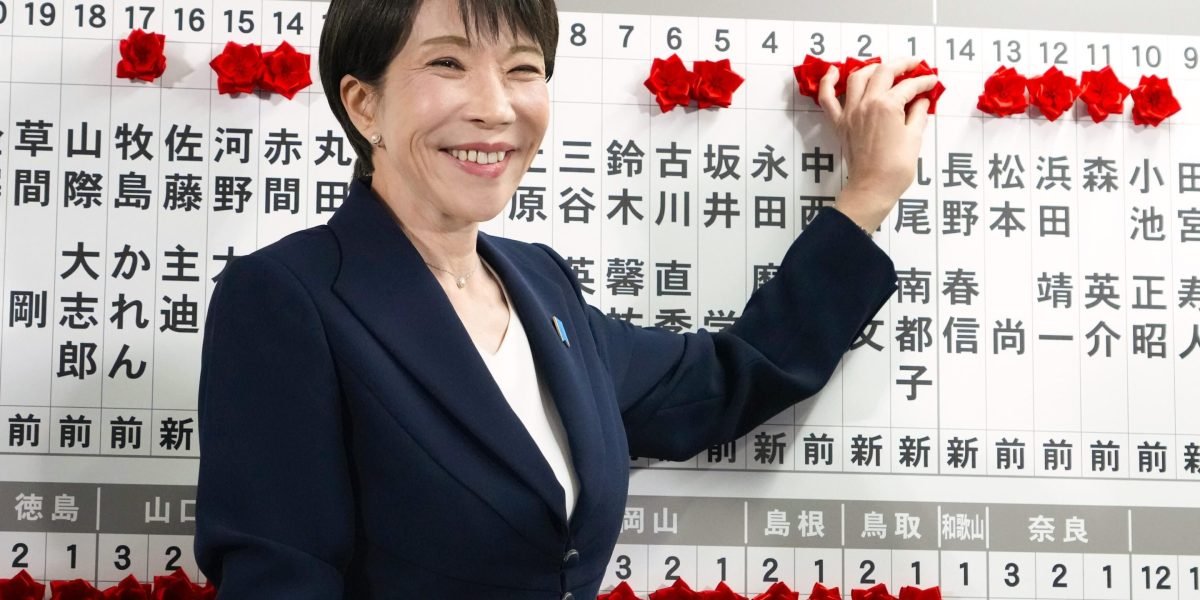
The ruling party of the Prime Minister Sanae Takaichi secured a two-thirds supermajority in a key parliamentary election on Sunday, Japanese media reported citing preliminary results, securing a landslide victory thanks to his popularity.
Takaichi, in a televised interview with public television network NHK after his sweeping victory, said he was ready to pursue policies that would make Japan strong and prosperous.
NHK, citing the results of the vote counts, said Takaichi’s Liberal Democratic Party, or LDP, alone had secured 316 seats early Monday, comfortably surpassing the 261-seat absolute majority of the 465-member lower house, the more powerful of Japan’s two-chambered parliament. That marks a record since the party was founded in 1955 and surpasses the previous record of 300 seats won in 1986 by the late Prime Minister Yasuhiro Nakasone.
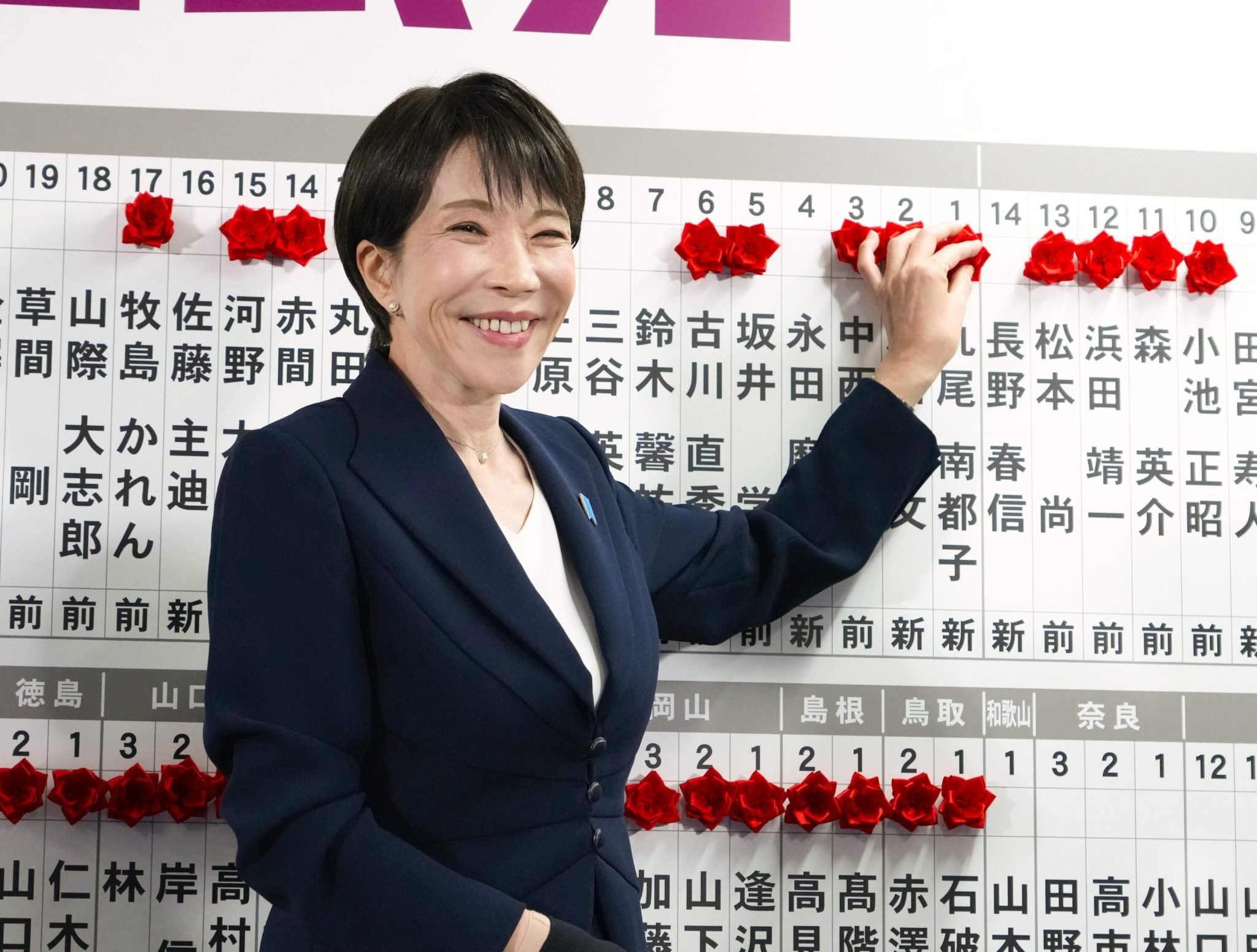
A smiling Takaichi placed a large red ribbon above each winner’s name on a signboard at LDP headquarters, as fellow party executives applauded.
Despite lacking a majority in the other chamber, the upper house, the big jump from the preelection side of the lower house will allow Takaichi to advance a right-wing agenda aimed at boosting Japan’s economy and military capabilities as tensions grow with China and he tries to nurture relations with the United States.
Takaichi said he will push hard for his policy goals while trying to gain support from the opposition.
“I will be flexible,” he said.
Takaichi is hugely popular, but the ruling LDP, which has ruled Japan for most of the past seven decades, has struggled with funding and religious scandals in recent years. He called Sunday’s snap election after three months in office, hoping to change that as his popularity soars.
Popular leader
The ultraconservative Takaichi, who took office as Japan’s first female leader in October, promised “work, work, work,” and his style, which can be seen playful and toughheard young fans saying that they were not interested in politics before.
The opposition, despite the formation of a new centrist alliance and a rise on the far right, is too fragmented to be a real challenger. The new opposition alliance of the LDP’s former coalition partner, the Buddhist-backed dovish Komeito, and the liberal-leaning Constitutional Democratic Party of Japan, is expected to sink half of their combined preelection share of 167 seats.
Takaichi is betting in this election that his LDP party, along with its new partner, the Japan Innovation Party, will get a majority.
Akihito Iwatake, a 53-year-old office worker, said he welcomed the LDP’s big win because he felt the party had been too liberal in the past few years. “With Takaichi moving things more on the conservative side, I think it’s brought positive results,” he said.
Takaichi’s policies
The prime minister wants to push for a significant rightward shift in Japan’s security, immigration and other policies. The LDP’s right-wing partner, JIP leader Hirofumi Yoshimura, says his party will serve as an “accelerator” for this push.
Japan has recently seen far-right populists gain ground, such as anti-globalism and rising nationalist party Sanseito. Exit polls project big gains for Sanseito.
The first major task for Takaichi when the lower house reconvenes in mid-February is to work on a budget bill, delayed by the election, to fund economic measures that address rising costs and slow wages.
Takaichi vows to change security and defense policies in December to strengthen Japan’s offensive military capabilities, lift the arms export ban and move away from the country’s postwar pacifist principles.
He has pushed for tougher foreign policies, anti-espionage and other measures that resonate with a far-right audience, but which experts say could harm civil rights.
Takaichi also wants to increase defense spending in response to the The pressure of US President Donald Trump for Japan to untie the purse strings.
He now has time to work on these policies, with no elections until 2028.
Distribution policies
Although Takaichi said he sought to gain support for policies seen as divisive in Japan, he largely avoided discussing ways to finance rising military spending, how to resolve diplomatic tensions with China and other issues.
In his campaign speeches, Takaichi passionately talked about the need for active government spending to fund “crisis management investment and growth,” such as measures to strengthen economic security, technology and other industries. Takaichi also intends to push for stricter immigration measures, including stricter requirements for foreign property owners and a limit on foreign residents.
Sunday’s election “underscores a problematic trend in Japanese politics where political survival comes before policy outcomes,” said Masato Kamikubo, a politics professor at Ritsumeikan University. “Every time the government tries necessary but unpopular reforms … the next election comes.”
Snow effect
Sunday’s vote coincided with fresh snowfall across the country, including Tokyo. Recording snowfall in northern Japan in the past few weeks roads have been blocked and blamed for many deaths across the country.