itstargetnews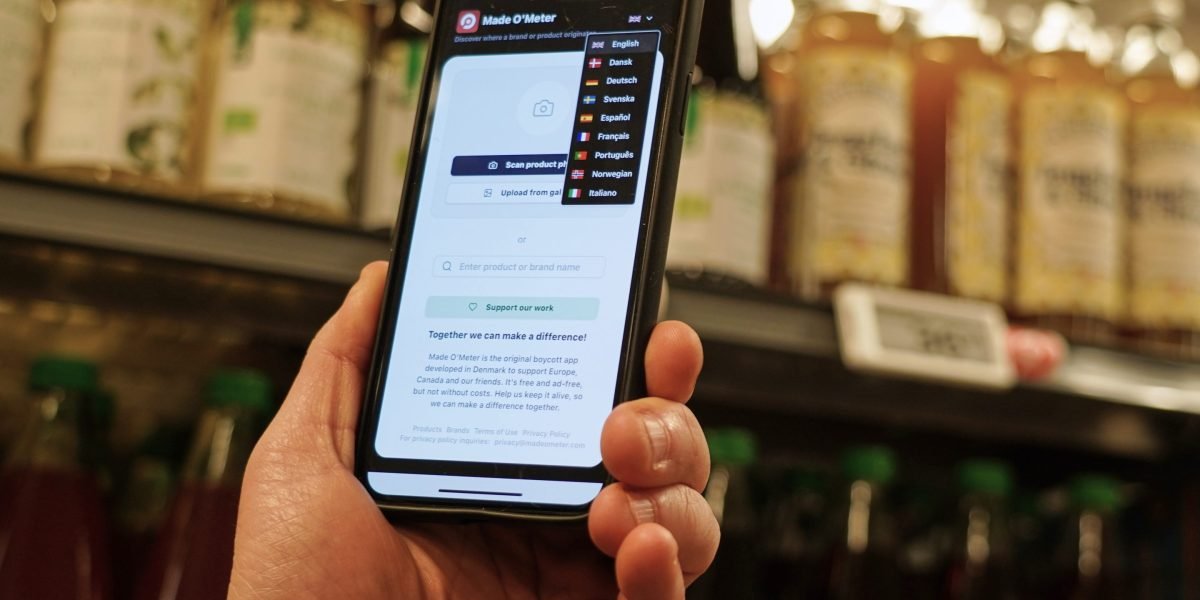
The makers of mobile apps designed to help shoppers identify and boycott of American products says they have seen a surge of interest in Denmark and beyond after the recent flare-up of tension with US President Donald Trump’s Greenland designs.
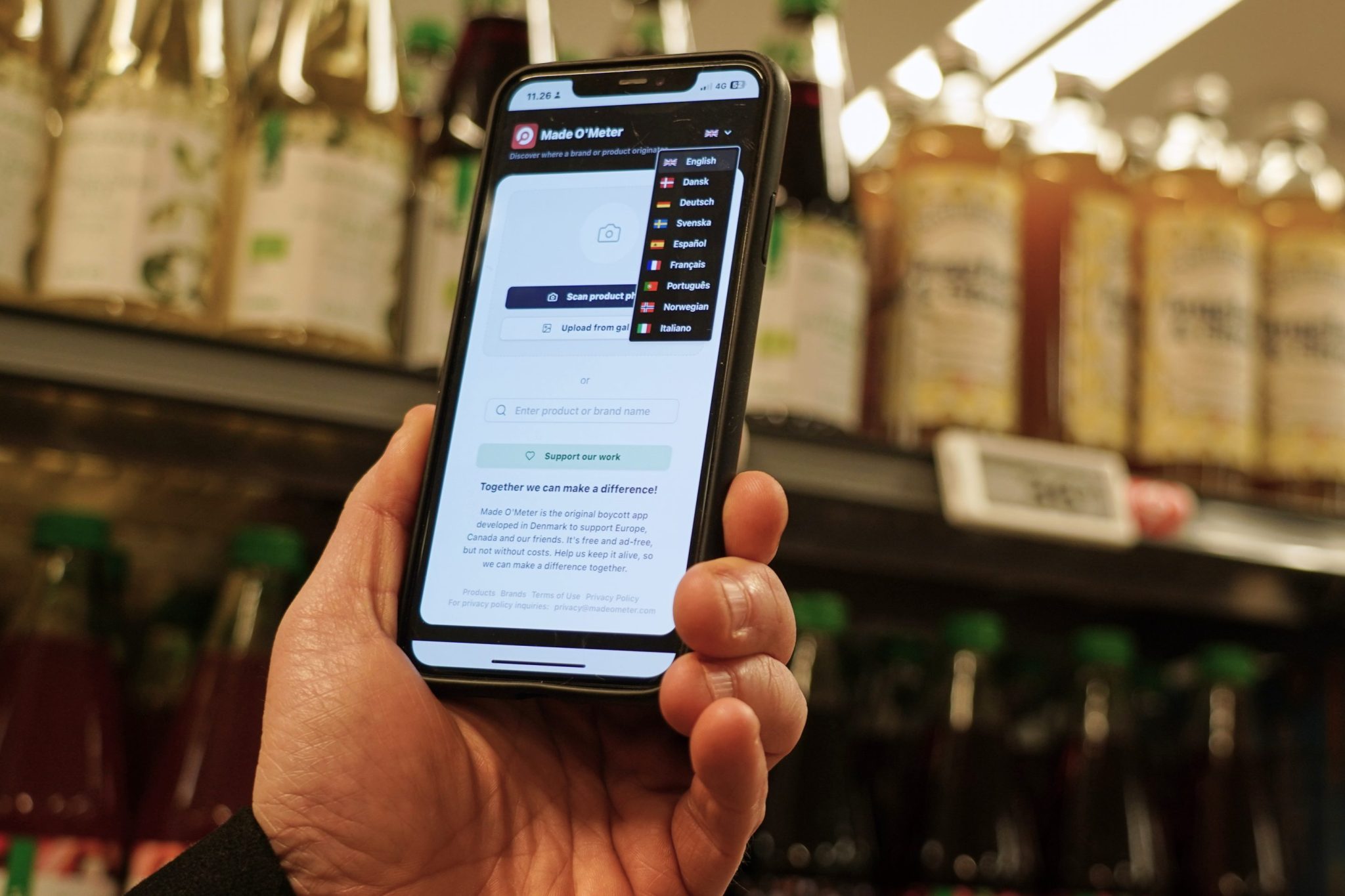
The creator of the “Made O’Meter” app, Ian Rosenfeldt, said he saw nearly 30,000 downloads of the free app in just three days up the trans-Atlantic. diplomatic crisis in late January from over 100,000 since it launched in March.
Apps offer practical help
Rosenfeldt, who lives in Copenhagen and works in digital marketing, decided to create the app a year ago after joining a Facebook group of like-minded Danes hoping to boycott US products.
“A lot of people were frustrated and thinking, ‘How can we do this in practical terms,'” the 53-year-old recalled. “When you use a bar code scanner, it’s hard to see if a product is really American or not, if it’s Danish or not. And if you don’t know, you can’t make an informed choice.”
The latest version of “Made O’Meter” uses artificial intelligence to identify and analyze several products at once, then recommend similar alternatives made in Europe. Users can set preferences, such as “No USA-owned brands” or “EU-based brands only.” The app claims over 95% accuracy.
“By using artificial intelligence, you can take an image of a product … and it can be a deep dive to get out and find the right information about the product on multiple levels,” Rosenfeldt told The Associated Press in a demonstration at a store in Copenhagen. “This way, you have information that you can use to make decisions about what you think is right.”
‘Ally lost’
After an initial surge of downloads when the app was launched, usage stagnated. Until last month, when Trump stepped up his rhetoric about the need for the US take Greenlanda strategically important and mineral-rich Arctic island that is a semiautonomous territory of Denmark.
Usage peaked on January 23, when there were nearly 40,000 scans a day, compared to 500 or more per day last summer. It has returned since but there were about 5,000 a day this week, said Rosenfeldt, who said that the “Made O’Meter” was used by more than 20,000 people in Denmark but also by people in Germany, Spain, Italy, even Venezuela.
“It became very personal,” said Rosenfeldt, who spoke of “losing an ally and a friend.”
Trump announced in January that he would impose new tariffs on Denmark and seven other European countries that opposed his calls for withdrawal, but suddenly dropped his threats after he said a “framework” for an agreement on access to mineral-rich Greenland had been reached with the help of NATO Secretary-General Mark Rutte. Few details of that agreement have emerged.
The US started technical talks in late January to put together an Arctic security deal with Denmark and Greenland, saying that sovereignty is not negotiable.
Rosenfeldt knows that such boycotts will not harm the US economy, but hopes to send a message to supermarkets and encourage more confidence in European producers.
“Maybe we can send a signal and people will listen and we can make a change,” he added.
The protest may be largely symbolic
Another Danish app, “NonUSA,” topped 100,000 downloads at the start of February. One of its creators, 21-year-old Jonas Pipper, said there were more than 25,000 downloads on January 21, when 526 product scans were made in one minute at one point. Of the users, about 46,000 are in Denmark and about 10,000 in Germany.
“We noticed some users saying they felt like a little pressure was taken off them,” Pipper said. “They feel like they’ve got the power back in this situation.”
It is questionable whether such apps have much practical effect.
Christina Gravert, an associate professor of economics at the University of Copenhagen, said there are very few US products on Danish grocery store shelves, “about 1 to 3%”. Peanuts, wine and candy, for example. But there is widespread use of American technology in Denmark, from Apple iPhones on Microsoft Office supplies.
“If you really want to have an impact, that’s where you have to start,” he said.
Both “Made O’Meter” and “NonUSA” are downloaded from Apple’s App Store and Google’s Play Store.
Gravert, who specializes in behavioral economics, says that such boycott campaigns usually don’t last long and that real change often requires an organized effort rather than individual consumers.
“It would be interesting for the big supermarket brands to say, OK, we’re not going to carry these products anymore because consumers don’t want to buy them,” he said. “If you think about the big companies, it might have some kind of impact on the imports (they) do.”
On a recent morning, shoppers leaving a store in Copenhagen were divided.
“We’re boycotting, but we don’t know all the American products. So, it’s mostly the well-known trademarks,” said Morten Nielsen, 68, a retired navy officer. “It’s a personal feeling … we feel like we’re doing something, I know we’re not doing much.”
“I love America, I love traveling in America,” said 63-year-old retired Charlotte Fuglsang. “I don’t think we should protest that way.”