itstargetnews
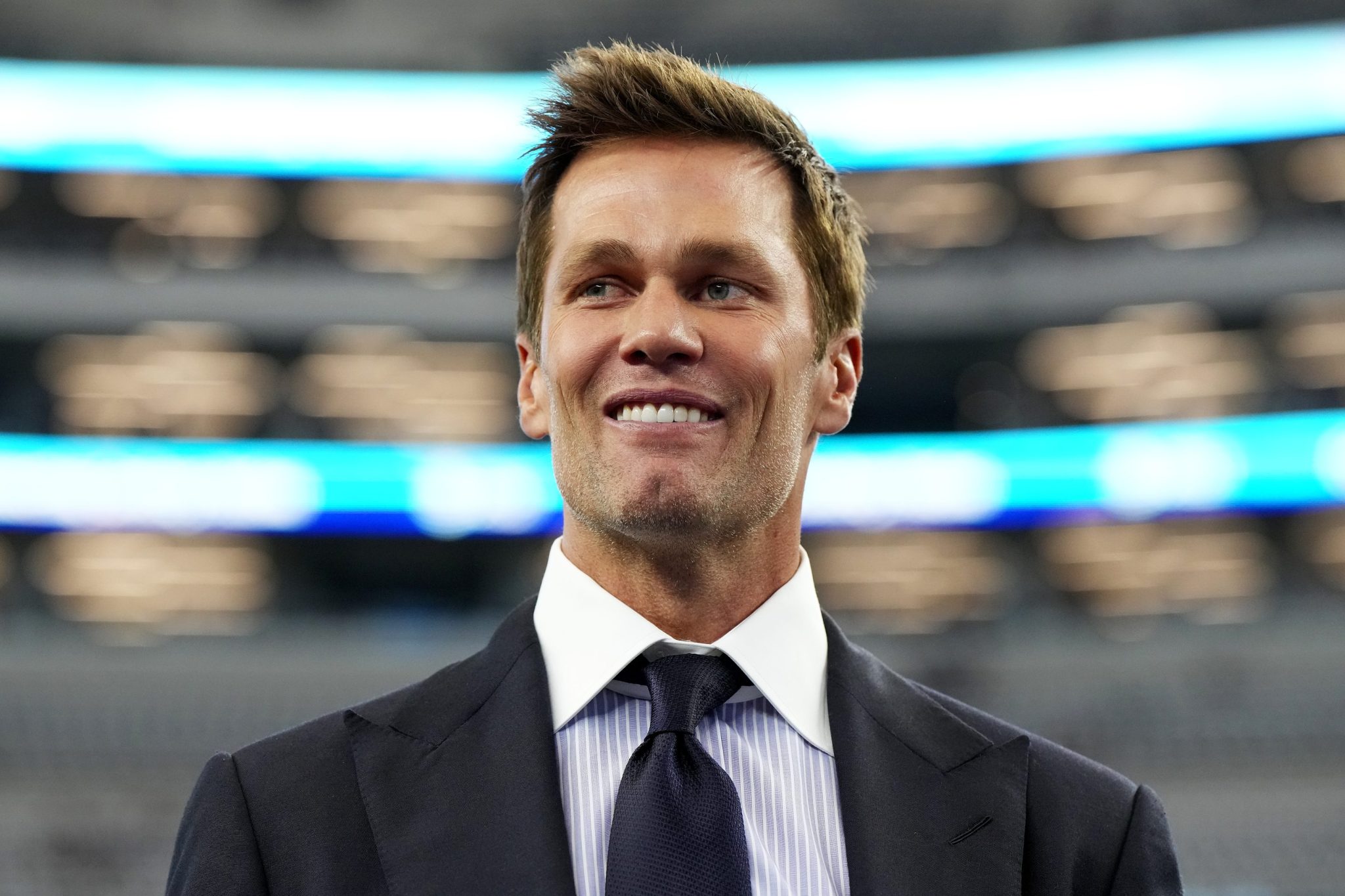
Tom Brady used to make his money the hard way: being pushed around by a 300-pound lineman, racing to the end of the line, in some of the most brutal NFL games one could ever watch. Now, he’s done more than he did in the Super Bowl without getting a single hit—just by talking.
Fox’s 10-year, $375 million contract with Brady works out to about $37.5 million a year. That’s 15 times the roughly $25 million he made as the highest-paid player in terms of salary during Super Bowl LV—before you factor in the performance bonuses, stock options, and endorsement halo that has followed him for decades. It’s ironic the greatest quarterback of all time is getting his biggest paycheck right after he retires.
But Brady’s post-playing career is a live demonstration of one of his favorite ideas: that “failure” is useful if you want to level up.
“To me, failure is amazing,” Brady SAYS on stage at Fortune’s 2024 Global Forum, explaining that the only way to build true trust is to put yourself “in uncomfortable positions,” get in trouble, and then figure out the solution.
“The reality of your business and career is overcoming adversity,” he continued. “The only way to do that is to fail.”
He described the reflex of other leaders passing the blame around the room, like watching a quarterback insist that the receiver caused a mistake: “I’m looking at the screen like, what are you talking about?”
That mindset, to own up to the mistake and fix it, turned out to benefit Brady in his television career.
Brady’s rookie season as Fox’s lead NFL analyst didn’t go so smoothly. According to his own account, he looked at his broadcasts back and shuddered in real time.
“Why did I say that?” he asks. “I don’t like that. That makes no sense.” He was learning a new craft in front of a weekly audience the size of a small country, and often just read the entirety of prepared notes instead of responding immediately.
That preparation is part of the problem. Brady, known to cover all his bases, brought pages and pages of notes and an outpouring of facts that weakened the show. He later described it as “TMI,” too much information. So, instead of trying to prepare like what he thought a broadcaster should, Brady started preparing like a quarterback, he said. The Athletic: scouting matchups, anticipating the next step, and building game plans as he always does. His second year got better as Brady grew on his own, instead of relying on others.
“Tom is the quarterback,” said his sports broadcaster partner, Kevin Burkhardt The Athletic. “We try to be a good teammate and open up the third for him.”
The numbers matched Brady’s lock-in. In its second season, the “TB12” broadcasting method began to yield measurable results. Fox saw a 6% jump in NFL viewership during the 2025-26 regular season, averaging 18.7 million viewers per game, the network’s second-highest average since audience records began in 1988. Brady’s sophomore performance earned “rave reviews” for his transition from a broadcaster’s mindset to a quarterback’s instincts. Experts like Richard Deitsch Noted on a podcast Brady became “more competent” and “clear” by weaving in real-game experiences, such as a unique breakdown of how wide receivers track deep balls based on their shoulder pad movement.
And, like any good quarterback, Brady is still working on his game.
“Even now, I probably have too much information,” Brady said The Athletic. “I think next year I’ll do better.”