itstargetnews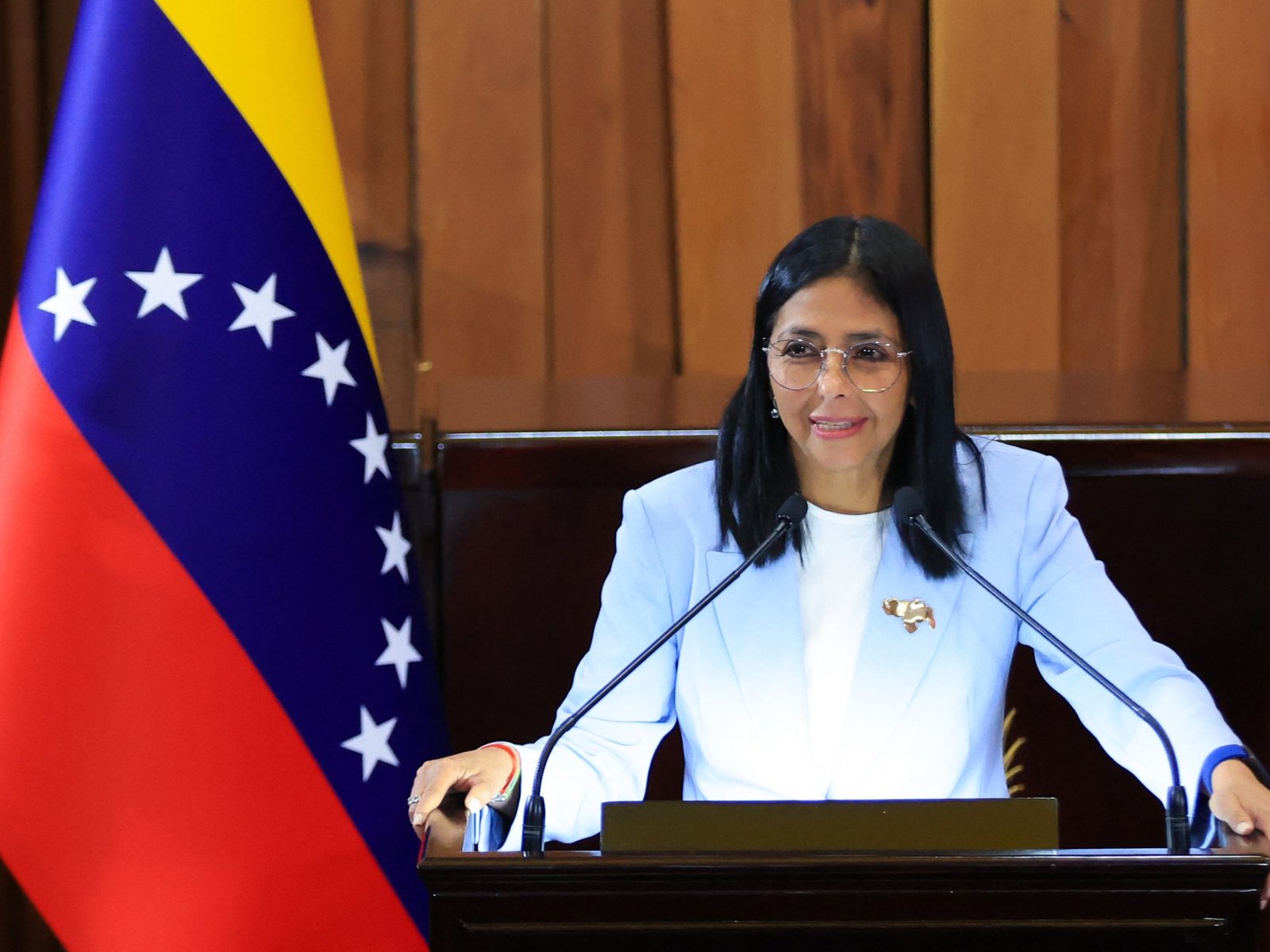
Venezuela received $500 million from its first oil sale under a U.S.-brokered deal after transferring 30 to 50 million barrels of crude to the United States.
The deal reached last month provides a lifeline to Venezuela’s struggling economy. However, the government does not control the returns. Instead, with U.S. approval, funds were deposited into restricted accounts in Qatar and used to pay public sector wages and essential services.
The new deal comes amid major political changes in the U.S. military kidnapping President Nicolás Maduro. On January 15, acting President Delcy Rodriguez proposed reforms to Venezuela’s hydrocarbons law aimed at attracting foreign investment by easing restrictions that have favored nationalization over the past 25 years.
U.S. Energy Secretary Chris Wright also said on Friday that he plans to visit Venezuela soon to meet “all leadership” and review oil and gas operations, as Washington says it intends to oversee Venezuela’s oil industry for the foreseeable future.
As Venezuela moves forward through these political changes, we examine how the government is maintaining its operations and the challenges it currently faces.
What’s the background? What happened in Venezuela?
A month after the United States launched Operation Absolute Resolve, Venezuela is facing a turbulent political and economic situation. The operation was performed on January 3, 2026, and the results in kidnapping Maduro and his wife Celia Flores. According to the Venezuelan Defense Ministry, the evacuation was fatal and resulted in at least 83 people died.
The Supreme Court subsequently declared Maduro’s arrest a “forced absence” and appointed Rodriguez acting president. Although Rodriguez denounced the U.S. action as “illegal kidnapping,” she has since expressed a willingness to work with Washington, including proposing reforms to attract foreign investment in the oil industry.
She also said she was shaping a new order while tightly controlling the implementation of reforms.
At home, Rodriguez also announced in late January a mass amnesty bill aimed at releasing political prisoners and plans to transform the notorious El Helicord prison into a community center.
Critics, however, argue that these measures may not address Venezuela’s structural problems, raising questions about the interim government’s long-term legitimacy and direction.
Who are the key figures in the Venezuelan government?
In Venezuela, power remains concentrated in a “civil-military” coalition.
While Rodriguez has formal executive power, analysts such as Salvador Santino Regilme, director of the international relations program at Leiden University in the Netherlands, say that in this case, “the real power is best understood as residing in the governing coalition rather than a single public official.”
Here are some of the key figures making up her government:
- Jorge Rodriguez (President of the National Assembly): The interim president’s brother controls the legislative branch. He was the architect behind the rapid approval of new energy reforms. “Rodríguez controls the legislative agenda and its results,” said Carlos Pina, a Venezuelan political analyst.

- Diosdado Cabello (Minister of the Interior): He represents the hard-line ideological wing of Chavismo. But he is under pressure: The United States has put a $25 million bounty on his head on narco-terrorism charges, and he faces an ultimatum from Washington to cooperate with the transition or face arrest.

- Vladimir Padrino (Minister of Defense): Despite U.S. drug trafficking charges and a $15 million reward for his capture, he still controlled the entire military chain of command and remained at his post for more than 11 years.

Piña also pointed out that there is one factor that is often overlooked: the business sector.
“Even before Rodriguez became interim president, many business leaders still operating in the country had rallied behind her,” Pina explained. “The group positioned itself as a shadow force,” he added.

How does the current government pay its bills?
Venezuela has the world’s largest proven oil reservesestimated at 303 billion barrels, more than five times that Those of America. Therefore, oil remains one of its main sources of income.
“Venezuela’s fiscal survival still depends mainly on hydrocarbons, as oil remains the only sector capable of generating rents on a large scale,” Santino told Al Jazeera.
The current financial control mechanism goes through several stages from oil extraction to final disbursement of funds.
Payments are not sent directly to Venezuela. Instead, they were deposited through U.S.-regulated channels into a restricted account in Qatar to prevent creditors from seizing the funds to recover Venezuela’s estimated $170 billion in foreign debt.
The United States also oversees the distribution of these funds. Venezuela must submit budget requests for specific purposes, such as paying for teachers, police and health care workers. Once approved, funds will be transferred to the Central Bank of Venezuela and then to local private banks.
“Venezuela is going to submit a budget every month that says, ‘This is the money we need.’ We’re going to give them a use for the (oil) money on the front end,” Rubio detailed the plan during an appearance before the Senate Foreign Relations Committee in January.
“I know it’s novel, but it’s the best we can think of in the short term,” Rubio added.

However, experts have expressed concerns about the impact of this arrangement.
“Right now, given the control…even though you have a facade with an interim president, Delcy Rodriguez and other members, the one who really has control is Donald Trump,” said José Manuel Puente, a professor at the Superior School of Administration in Caracas.
“Venezuela is now a country regulated by the United States. The United States controls all its revenue,” he added.
Some U.S. officials also criticized the arrangement. Democrat Lloyd Doggett explain Rubio’s testimony ‘raised more questions than answers’
“There are currently no safeguards in place to ensure that the Rodriguez family does not use these proceeds to bribe Maduro’s allies,” Doggett said.
By following this plan, “(Trump) illegally refuses to repay debts owed to U.S. institutions… while (he) instead appears to be rewarding his donors,” he added.
Are there other sources of government revenue?
The government is trying to diversify its revenue sources beyond oil revenue.
State owned Largest official gold Latin American reserves. Venezuela’s reserves are approximately 161.2 tons, worth more than $23 billion at today’s market value.
The country is also believed to have some of the most significant untapped gold resources, but official data is out of date. Most gold production occurs through informal or illegal mining networks, especially in southern states such as Bolivar.
According to the government, Venezuela’s gold production in 2025 will be 9.5 tons.
“The share of gold has increased in recent years, as is the case with some small export sectors, such as tropical fruits or shrimp,” Puente explained.
“There are industries that can generate some revenue but are still completely asymmetrical in favor of oil,” he added.
What is the situation at home?
More than 7.9 million people are in need of emergency humanitarian assistance, approx. 56% With so many people living in extreme poverty, governments are under intense pressure to implement effective solutions, according to data from the United Nations and the European Civil Protection and Humanitarian Aid Initiative.
National wages are too low to cover basic living expenses.
“I am a housewife. I don’t work. My two eldest children work, but their wages are not enough,” Zulma Clavo, a resident of Petare, Caracas, told Al Jazeera.
“My son is a motorcycle taxi driver and has to take risks to survive, while my daughter earns minimum wage, which is still not enough. When we go grocery shopping, we realize we have to put things back because we don’t have enough money,” she added.
Experts say the economy will ease as oil production increases.
“Obviously, it’s going to be a huge (money) flow. The thing is, ultimately it’s the Americans who decide how and what to invest, and that’s the difference,” Puente said.