itstargetnews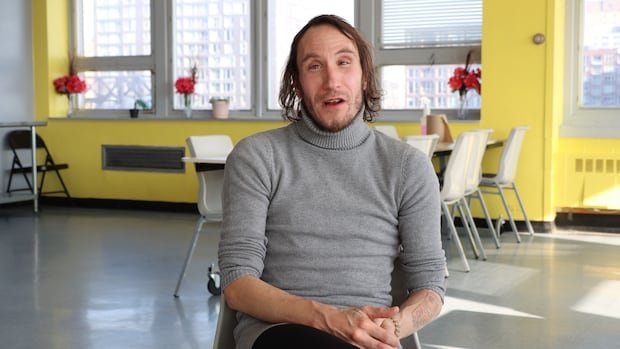
Darin Luckie said a combination of drugs, alcohol and the COVID-19 pandemic caused his life to fall apart, leaving him homeless in Montreal.
“I expected to recover in a few months. A few months turned into a year. And a year turned into four,” he said. “Then you say, ‘It’s -30 outside and I don’t want to do it anymore,'” he said.
Montreal’s health agency has now partnered with the YMCA to launch a three-month transitional housing pilot project that helps people like Luckie — providing a safe alternative to private rooms for people left homeless after being discharged from hospital.
People experiencing homelessness struggle to recover from illness or injury after being discharged from the emergency room, said Catherine Roberge, who is program manager for administration, addiction and homelessness at CIUSSS de l’Ouest-de-l’Île-de-Montréal.
“There is a high flow of people without an address who come for care and often return to the emergency room,” she said.
In a press release, CIUSSS calls the program “The Road to Recovery.” Located at the Tupper YMCA site, which previously housed hundreds of asylum seekers, the project offers 48 private rooms — including couples’ units — to patients discharged from the Jewish General Hospital or the Montreal General Hospital.
But the outreach team is also in contact with patients from other hospitals, as well as officials looking to fill space quickly as the program, launched in mid-January, gets underway, Roberge said, noting that will help ease pressure on hospitals as well as patients.
“There is so much rotation between emergency services,” she said. “From a simple wound, while experiencing homelessness at the same time, it can be very difficult to recover.”

A new pilot project at the Tupper YMCA in Westmount, Que., aims to fundamentally change what happens when homeless patients are discharged from hospital by offering them temporary housing.
Often in these cases, hospitals will advocate for a longer stay or even recovery in a long-term care home, which is not ideal for younger patients, she explained.
But in this new space, patients will have more autonomy, she said. They are linked to clinical services, case management and housing support. I can go to CLSC for further care and return to my private room, she said.
An increase in the number of patients experiencing homelessness
Priority is currently being given to referrals from the Jewish General Service, where the number of patients who have lost their homes has risen from 149 in 2022-2023. to 339 in 2024-2025, CIUSSS says.
Currently, the occupancy of the location is 58 percent. The YMCA manages the building and the psychosocial team, while the CIUSSS provides nurses, social workers and addictions liaisons.
Roberge said the goal is to provide care for those with substance abuse, signs of dementia, mental illness, mobility impairments and other issues.

“It’s very diverse,” she said, noting that they offer three meals a day, as well as assistants to help find accommodations. “Some are very eager to find an apartment.”
Unlike conventional dormitory-style shelters, this model offers built-in clinical teams integrated with hospital programs and allows for stays of up to 45 days — longer than most winter shelters.
The pilot was made possible by a temporary drop in demand for asylum seeker accommodation, although the site retains the ability to reactivate beds as part of the immigration programme, The regional program accepts and integrates asylum seekers (PRAIDA), within 45 days if necessary, says the health agency.
Upon completion, the project will be formally evaluated based on various criteria such as reduced emergency service returns within 45 days and user satisfaction, the statement said.
‘They treat us like rodents’
As for Luckie, who has been on the streets since August 2022, he said it’s been difficult, despite efforts like rehab, to get back on track.
“They treat us like rodents. We can’t make money. We’re stuck in a circle,” he said. “They treat us like shit, but then where do you want us to go?”

Looking ahead, he wants to break the cycle and have a key to his own apartment so he can get a phone and a job.
“Everyone says get a job, but first you need a phone,” Luckie said. “You can’t go to work in the same clothes for a week.”
A stay at A Pathway to Recovery helped, he said.
“I shower, I shave, I take care of myself,” Luckie said. “I buy clothes. I bought a tablet. I can go to my room and know that my tablet is safe. That’s a big deal.”