itstargetnews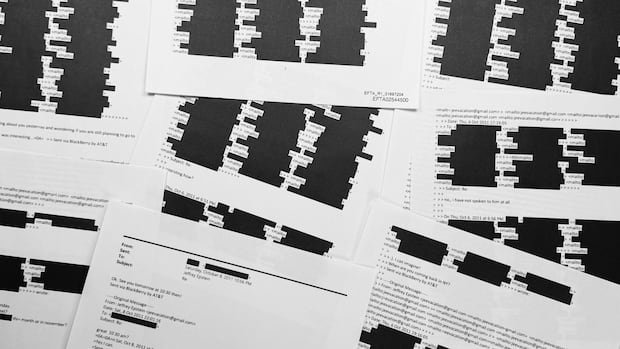

Listen to this article
Estimated 6 minutes
The audio version of this article was generated using artificial intelligence-based technology. Mistakes in pronunciation may occur. We work with our partners to constantly review and improve results.
WARNING: This article may affect those who have experienced sexual violence or know someone who has been affected by it.
Almost as soon as the US Justice Department released three million more Jeffrey Epstein files on Friday, it began returning thousands of them.
Lawyers for victims of the late sex predator immediately noted that, despite the department’s promises, some of its released records contained the names or other identifying information of dozens of women who had accused Epstein of sex trafficking, molestation and other crimes.
“On January 30, 2026, the DOJ committed what may be the most outrageous violation of victim privacy in a single day in United States history,” Attorneys Brittany Henderson and Brad Edwards wrote in a letter which asked two US federal judges to order the government to take down the website containing Epstein’s files.
“There is no imaginable degree of institutional incompetence sufficient to explain the scale, consistency and persistence of the omissions that occurred – especially where the only task ordered … was simple: Redact the known names of the victims before publication.”
Acts of victims, names published
The Justice Department pledged to do everything in its power to “ensure that the victim’s privacy is protected to the fullest extent possible,” U.S. Attorney Pam Bondi and U.S. Attorney Jay Clayton he said days before the release. That included assigning more than 500 attorneys and reviewers to manually review documents page by page and evaluate video recordings, “as well as electronic searches for victims’ names or other identifiers.”
The department has been required to review the materials it has released since at least Nov. 19, when the Epstein Files Transparency Act was passed into law. However, despite these alleged efforts, Epstein’s files were released on Friday included nude photos of young women — some of whom may have been teenagers — as well as information such as the names and dates of birth of the victims.

CBC News has revealed that among the removed documents was a transcript of a 2007 testimony by an agent assigned to the FBI’s Operation Leap Year, the code name for the agency’s investigation into Epstein.
Although there are redactions, the transcript included the agent’s statement from a minor victim who was in the photographs seized in the investigation. It showed her first and last name initials, date of birth and high school.
Later in the testimony, the special agent went on to detail how Epstein recruited the girl for massages, which escalated to sexual activity in future sessions.
There were graphic descriptions of certain incidents, including where Epstein touched her or ordered her to touch him. He allegedly gave her a vibrator for her 18th birthday.
By Tuesday morning, the document was no longer available on the Justice Department’s website.

The US Department of Justice is releasing three million more pages of Epstein files today, including more than 2,000 videos and 180,000 images. Deputy US Attorney Todd Blanche signaled that today’s dismissal represented the full release of Epstein’s files, as required by law. Published documents include extensive redactions; Blanche said the victims’ information was removed before it was released.
‘Wrong newsroom’ leaks information about victims
Another document that has since been removed included indecent allegations of potentially criminal behavior by US President Donald Trump and former President Bill Clinton, including allegations of sex with underage girls. These claims have never been substantiated by any investigator.
“Some of the documents contain false and sensationalist allegations against President Trump that were provided to the FBI shortly before the 2020 election,” the Justice Department wrote in press release on Friday.
Some of Epstein’s alleged victims, through attorneys Henderson and Edwards, begged the judges overseeing the release of the records to have their names removed. “I never came forward! Now I’m being harassed by the media and others. This is devastating to my life,” said a woman named Jane Doe 5, according to lawyer’s letter to the court.

In other cases, the release failed to protect the personal privacy of those unrelated to the Epstein investigations. For example, CBC News found that the name of a prison guard who worked at the Manhattan prison where Epstein died was not redacted at least once, allowing his identification to be combined with other details.
In another example, reviewers failed to black out the personal email address of a young woman whose parents were friends of Epstein, despite redacting it elsewhere.
A Department of Justice spokesperson confirmed to CBC News in an email earlier this week that 0.1 percent of the posted pages contained “unredacted victim-identifying information” — meaning more than 3,000 pages had to be removed.
“Our team is working around the clock to resolve the issue and republish the corresponding redacted pages as soon as possible.”
But critics say the gaffes are unacceptable.
“WRONG REDUCTION. VICTIMS LEFT UNPROTECTED. MILLIONS OF FILES DISAPPEAR,” California Governor Gavin Newsom wrote on X. “WHAT IS HE HIDING?”
IN joint statementSurvivors of the sexual predator denounced how they “should never be named, scrutinized and retraumatized while Epstein’s enablers continue to benefit from secrecy.”
“This is not over,” they said. “We will not stop until the truth is fully revealed and every perpetrator is finally held accountable.”
In their submission to the court, the lawyers say that the leak of the victims’ information was completely preventable, even through a “simple name search”.
“Simply type the victim’s name into the search bar, and if there are any results, apply redactions before publication. The DOJ has proven unable or unwilling to perform that basic task.”
If you are in immediate danger or fear for your safety or the safety of others around you, call 911. For support in your area, you can search for crisis lines and local services at Canadian Association Against Sexual Violence database.