itstargetnews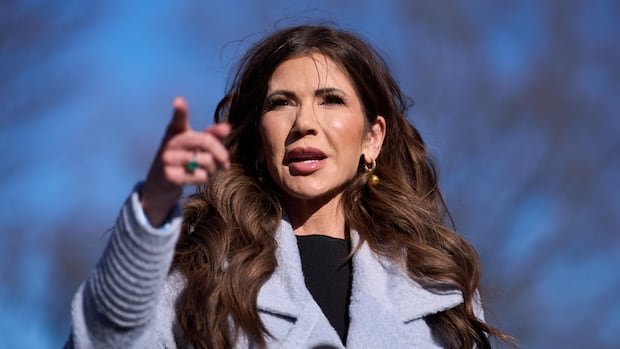
A federal judge on Monday night blocked the repeal of protections that have allowed approximately 350,000 Haitians to live in the US, throwing President Donald Trump’s immigration plan into another legal, if perhaps temporary, problem.
US District Judge Ana Reyes in Washington has granted a request to stay the termination of Temporary Protected Status (TPS) for Haitians pending a lawsuit challenging it. The termination, scheduled for Tuesday, “shall be null, void and of no legal effect,” she wrote.
Reyes said in the 83-page opinion that prosecutors were likely to prevail on the merits of the case and that she found it “quite likely” that Homeland Security Secretary Kristi Noem premeditated her decision to fire her and was “motivated, at least in part, by racial animus.”
Although the ruling provides temporary relief to the Haitians, the next legal steps were unclear.
Department of Homeland Security (DHS) spokeswoman Tricia McLaughlin condemned the ruling as “lawless activism.”
“Haiti got TPS after the earthquake that happened over 15 years ago,” she said. “It was never meant to be a de facto amnesty program, but that’s how previous administrations used it for decades.”

Haiti is not safe, prosecutors say
The judge, appointed by former President Joe Biden, said Noem had significant policy discretion as DHS secretary but did not have “unfettered discretion” and was required to consult with other agencies about conditions in Haiti.
“Secretary Noem makes decisions,” Reyes wrote. “But the secretary can’t just throw demonstrably inappropriate or false allegation after inappropriate or false allegation — no matter how inflammatory — against the wall and hope something sticks.”
In one instance, Noem raised the issue of Haitian gang members entering the country, but Reyes noted that the government did not provide evidence of what happened to TPS holders, who were previously vetted.
Temporary protected status may be granted by the Secretary of Homeland Security if conditions in home countries are deemed unsafe for return due to natural disaster, political instability, or other hazards. While it gives TPS holders the right to live and work in the US, it does not provide a legal path to citizenship.
Haiti’s TPS status was initially activated in 2010 after the catastrophic earthquake and has been extended several times. The country has been plagued by gang violence that has displaced hundreds of thousands of people, and plans to hold elections this year appear to be in jeopardy.
“If the termination remains in place, people will almost certainly die,” lawyers for Haitian TPS holders wrote in a court filing in December. “Some are likely to be killed, others are likely to die of disease, and still others are likely to die of starvation.”

Haiti qualified for the 2026 World Cup for the first time in 50 years, but a travel ban and immigration crackdown will keep many fans away from American games. For The National, CBC’s Eli Glasner talks to Haitians about the meaning of this moment and explains why some are calling out FIFA for its hypocrisy.
A government notice in November announcing the end of TPS for Haitians said there had been some positive developments in Haiti, including the authorization of a new, multinational anti-gang force.
The judge said that in support of that position, the government had selected statements from UN Secretary-General António Guterres, and also took note of US Secretary of State Marco Rubio’s statement in October, which stated that Haiti faced “imminent security challenges”.
The court said Noem did not consult with Rubio, the US ambassador to Haiti or the US embassy there in making the decision.
The ruling also took exception to Noem’s own words three days after he announced the end of protections for Haiti, calling for a travel ban from Haiti and “every damn country that has overrun our nation with murderers, leeches and entitlement junkies.”
Reyes took pains to emphasize that the five Haitians suing in this case are not “murderers, leeches or entitlement junkies,” but a neuroscientist, a software engineer, a registered nurse, a lab assistant and a student.
Respite welcomed in Ohio city
While campaigning for president in 2024, Trump vilified the community of about 15,000 Haitians in Springfield, Ohio, including in his lone debate with Democrat Kamala Harris alleging that some of the immigrants ate neighborhood pets in the mostly white, working-class city of about 59,000 people.
Reyes took note of those comments, along with reports that Trump referred to Haiti as one of a number of “shithole” countries in his first term.
In the weeks following his comments, schools, government buildings and the homes of elected officials in the city received bomb threats.

Earlier Monday, two dozen faith leaders and hundreds of worshipers in Springfield sang and prayed together in support of Haitian migrants who feared their protected status could end this week.
Lynn Tramonte, executive director of the Ohio Immigrant Association, said the court’s “11 o’clock delay is, of course, welcome. But people can’t live their lives like this, tying the future of their families to a court case.”
The Trump administration has aggressively sought to remove temporary protections, making more people eligible for deportation. The moves are part of the administration’s broader mass deportation effort.
In addition to migrants from Haiti, Noem revoked protections for about 600,000 Venezuelans, 60,000 people from Honduras, Nicaragua and Nepal, more than 160,000 Ukrainians and thousands of people from Afghanistan and Cameroon. Several of these decisions have been contested in the courts.