itstargetnews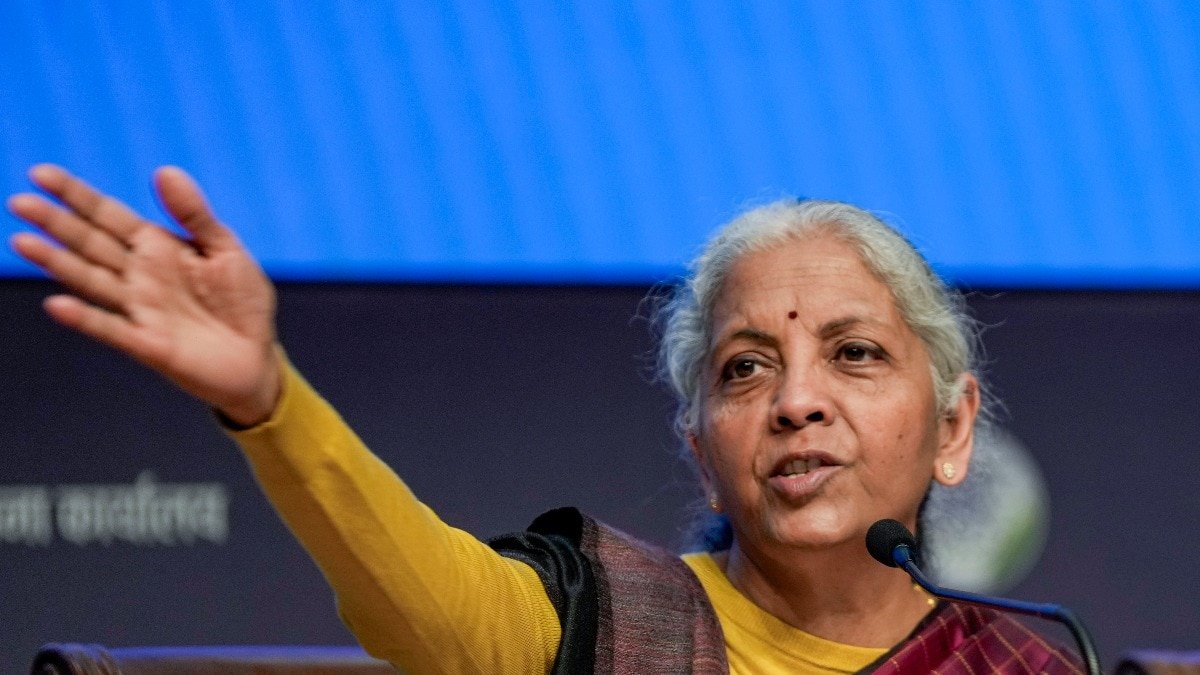
union Finance Minister Nirmala Sitharaman has stated that the recently announced agreement between India and the united states focuses on reducing tariffs. India and the United States have reached a trade deal under which Washington will reduce reciprocal tariffs on Indian goods to 18 percent, US President Donald Trump said on Monday (February 3) after a phone call with Prime Minister Narendra Modi.
In an interview with PTI Videos, Sitharaman said the tariff announcement, in which Indian exports to the US will attract a lower tariff of 18%, is a “good omen” for India.
FM Sitharaman directly addressed the focus of the deal, stating, “It’s about the reduction in tariffs.” His statement clarifies that the underlying purpose of the agreement is specifically to address concerns related to tariffs, rather than broader regulatory or structural reforms.
While the minister highlighted the emphasis on tariff reduction, no further details on specific tariffs or additional policy mechanisms have been revealed at this stage.
India-US BTA
A joint statement on the India-US trade deal is expected to be released in the next two to three days, official sources said business today on tuesday Under the deal, India is expected to import goods worth about $500 billion from the United States over the next five years, the sources said. Of that, data centers alone are expected to account for nearly $20 billion.
Officials also indicated that India could receive duty-free benefits in several categories as part of the deal.
At a press conference, Commerce and Industry Minister Piyush Goyal said Prime Minister Narendra Modi had consistently ensured that India’s sensitive sectors were protected during the negotiations. “Prime Minister Modi has always ensured protection of the agriculture and dairy sectors,” Goyal said, adding that under the India-US trade agreement, “sensitive sectors like agriculture and dairy have been protected.”
Goyal added that the agreement is now in the final stage of detailing, after which a joint statement will be issued once the technical formalities are completed. “I can assure the people of India that this agreement will protect the interests of all Indians, create important opportunities and safeguard sensitive sectors,” he said.
Almost after a year
New Delhi and Washington have been negotiating a bilateral trade agreement (BTA) since February last year, with an ambitious goal of scaling bilateral trade to $500 billion by 2030, up from about $191 billion today. The United States is India’s largest trading partner, with two-way trade valued at $131.84 billion.
With the India-US trade pact and a free trade agreement with the European Union concluded a few days ago, India has for the first time secured comprehensive trade deals with two of the world’s largest trading blocs. In addition, India has signed four other trade agreements, including agreements with the United Kingdom, Oman and New Zealand, further expanding its global trade footprint.
Announcing the deal, President Donald Trump said the decision was taken keeping in mind his relationship with Prime Minister Narendra Modi. “Out of friendship and respect for Prime Minister Modi and at his request, we have agreed to a trade agreement between the United States and India, effective immediately. Under the agreement, the United States will reduce the reciprocal tariff on Indian goods from 25% to 18%,” Trump wrote on Truth Social on Monday night India time. He added that India would also reduce its tariffs and non-tariff barriers on US goods to zero.
Responding to Trump’s post, Prime Minister Modi expressed his gratitude for the announcement. “Wonderful to speak with my dear friend President Trump today,” Modi wrote on X after the call. “I am delighted that ‘Made in India’ products now face a reduced tariff of 18%. My sincere thanks to President Trump on behalf of 1.4 billion Indians for this wonderful decision. When two great economies and the world’s largest democracies work together, it benefits our people and opens up immense opportunities for mutually beneficial cooperation.”