itstargetnews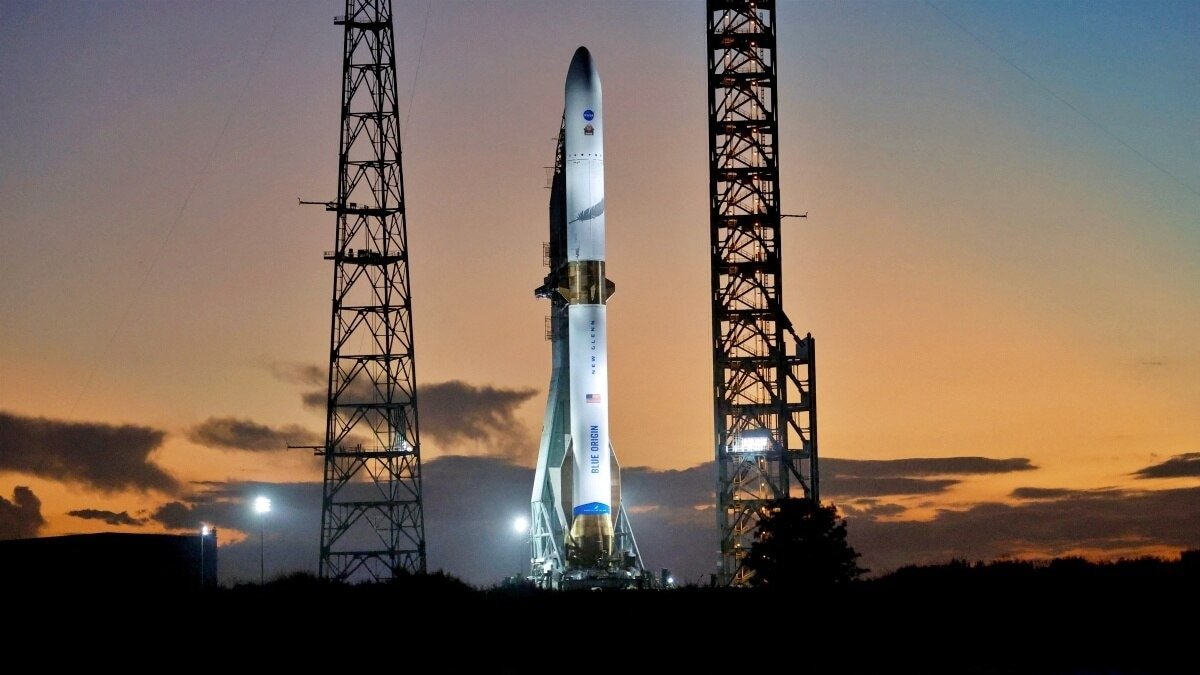
Blue Origin, the aerospace company founded by Amazon’s Jeff Bezos, has announced a hiatus of at least two years on its New Shepard space tourism program, signaling a decisive shift from suborbital travel to deep space exploration.
The company said it will suspend New Shepard flights and redirect resources toward accelerating development of its NASA-funded human lunar lander, Blue Moon, a move that underscores the industry’s growing emphasis on government-backed exploration over commercial space tourism.
In a statement, Blue Origin confirmed that it would “stop its New Shepard flights and shift resources to further accelerate the development of the company’s human lunar capabilities.”
CEO Dave Limp informed employees of the decision in an internal email, acknowledging the historic role the reusable rocket played. “New Shepard has achieved great success and will forever be our first step,” Limp wrote, describing the hiatus as a difficult but necessary call. He added that engineers and technical teams would be redeployed to bolster work on New Glenn, the company’s long-delayed heavy-lift orbital rocket, and on lunar projects.
From celebrity flights to critical technology
First launched in April 2015, the 63-foot-tall New Shepard rocket has completed 38 suborbital missions from West Texas, carrying passengers and research payloads about 107 kilometers above Earth, crossing the widely recognized limit of space.
The program gained global attention for high-profile flying passengers, including pop star Katy Perry and Star Trek legend William Shatner, helping to position Blue Origin as a major player in the emerging space tourism market. Ticket prices were never officially disclosed, but industry estimates range from $200,000 to $1 million per seat.
Beyond celebrity appeal, New Shepard also served as a crucial testbed. Its vertical takeoff and precision landing on a concrete platform were pioneering techniques that later informed Blue Origin’s orbital ambitions, particularly New Glenn, which is expected to compete with SpaceX’s Falcon Heavy and Starship systems.
However, the program also received criticism for its relatively slow flight rate compared to rivals such as Virgin Galactic, limiting revenue potential and operational scale.
A break or a quiet goodbye?
While Blue Origin describes the move as a temporary hiatus, some employees privately see it as a de facto cancellation, sources told Reuters on condition of anonymity. Internally, the announcement has sparked mixed reactions: pride in New Shepard’s pioneering legacy, along with uncertainty about job roles and long-term prospects.
The change comes as Blue Origin looks to close the gap with Elon Musk’s SpaceX, which has advanced in launch frequency, revenue and operational maturity.
Lunar ambitions take center stage
At the heart of Blue Origin’s strategic realignment is its $3.6 billion contract with Nasa to develop Blue Moon, a human lunar lander for the Artemis program. The lander is expected to carry American astronauts to the surface of the Moon later this decade, competing directly with SpaceX’s spacecraft-based lunar system.
“We are prioritizing research missions to the Moon,” the company said, reflecting a broader recalibration in the commercial space sector. As costs rise and competition intensifies, suborbital tourism, while glamorous, offers diminishing returns compared to long-term government contracts tied to orbital infrastructure and lunar exploration.
Global career beyond tourism
Blue Origin’s pivot highlights the evolving economics of spaceflight, where spectacle is giving way to strategic capability. The movement also has global resonance. As the Indian Space Research Organization (Isro) prepares for Chandrayaan-4, with ambitions centered on the Moon’s south pole, the race for lunar leadership is intensifying.
Blue Origin’s bid underscores a central truth of the modern space race: Tourism may fund early innovation, but the moon landings, and the infrastructure they enable, define the legacy.