itstargetnews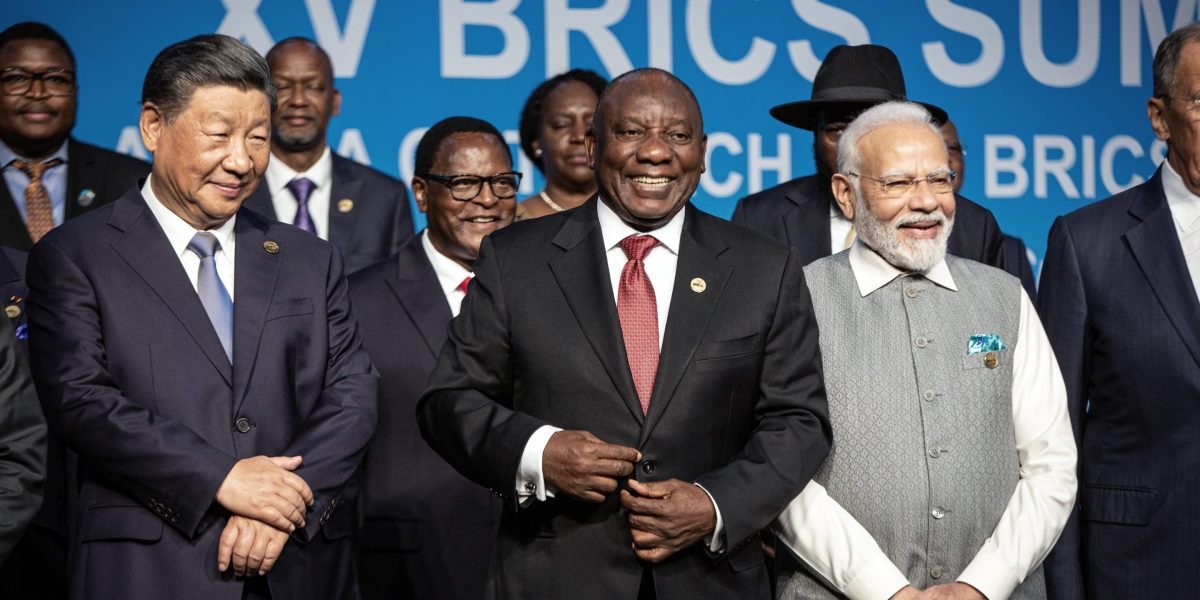
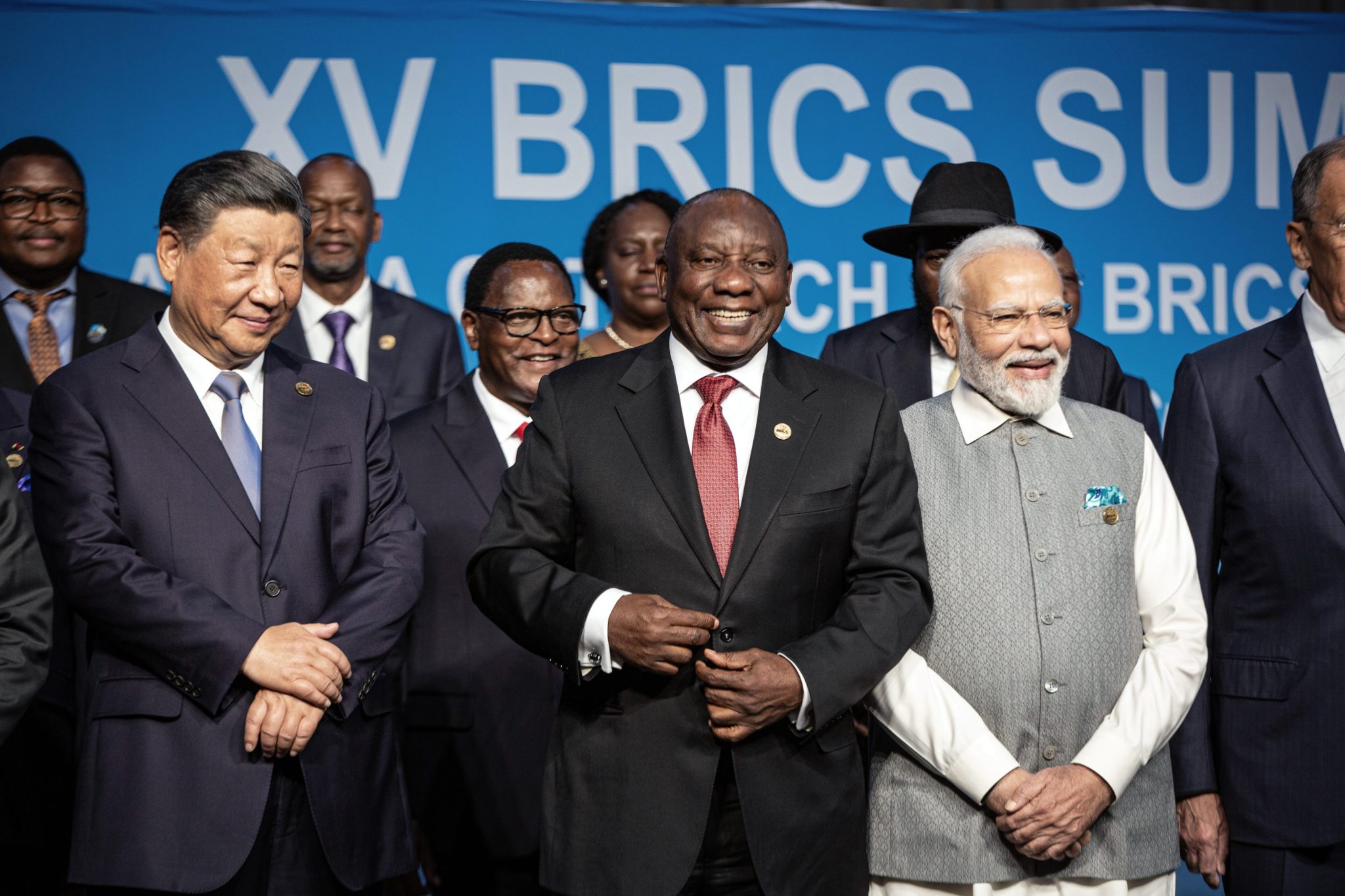
BRICS has come a long way since Goldman Sachs economist Jim O’Neill conceived it in 2001. As of January, it now consists of ten countries: the original five of Brazil, Russia, India, China and South Africa, and five new additions of Egypt, Ethiopia, Indonesia, Iran, and the United Arab Emirates.
As the post-war US-led international order shows its cracks, it may be tempting to see the BRICS as a potential pillar of a new world order. It has nearly half of the world’s population, nearly three-quarters of its rare earth minerals, and more than a third of its crude oil.
In the eyes of its proponents, BRICS is the core of a new world orderwhere Western voices can no longer dictate the global agenda or serve as the sole source of finance, technology, or expertise. It could be an avenue to find new markets, build new supply chains and hedge against an increasingly protectionist White House.
The BRICS has certainly spooked some in Washington. US President Donald Trump has constantly threatened to impose 100% tariffs of the BRICS+ countries when they move to develop their own currency. He also proposed a 10% tariff on countries that align themselves “with anti-American BRICS policies.” (Trump did not follow)
But the main threat to BRICS is not Trump, NATO, or the West. Rather, it comes from within: That BRICS is expanding too quickly and may be inconsistent, and that it is falling short of its promise to reform global governance.
Enlargement may look good on paper, but BRICS needs ground rules, enforcement, and even a common message. The bloc must address some pressing internal issues if it is to maintain the strategic power and momentum it has gained in recent years.
First, it must manage deep internal rivalries, particularly with China and India, its two largest members. The two have sought to build a floor under their relationship, since the meetings with Chinese President Xi Jinping and Indian Prime Minister Narendra Modi in Kazan, Russia and Tianjin, China. Yet the relationship is still fraught with tension over long-standing territorial disputes; the latest flare-up came after an Indian citizen born in Arunachal Pradesh, which China claims as its territory, was detained at Shanghai airport for 18 hours.
Second, BRICS must balance economic security with the political objectives of members. Beijing may see BRICS as an effective way to facilitate investment in projects in West Asia, Central Asia, and the Indian Ocean, although India, which has long been a watcher of the Belt and Road Initiative, is skeptical of this infrastructure expansion. Pakistan wants to join the New Development Bank, BRICS’s development finance institution. Despite India as the BRICS’s chair this year, it is unlikely that Pakistan’s application will go smoothly, as New Delhi is wary of endorsing funding for its longtime rival.
True, BRICS was never meant to resolve all disagreements between its members. Yet the organization has also lost many opportunities to truly improve cooperation between its members, outside of the structures established by the West.
For example, the bloc established the Contingent Reserve Arrangement (CRA) to provide currency swaps during foreign exchange shortages. However the CRA also stipulates that members must comply with IMF conditions if they want access to more than 30% of the total rights. Ironically, that pushed South Africa to opt for the IMF’s improved and reformed CRA, when it had to get a controversial $4.3 billion loan in 2020.
In theory, the flexibility of BRICS should be an asset, allowing it to accept members from across the geopolitical spectrum. Yet without a way to coordinate governments, enforce regulations and punish compliance, the bloc is, essentially, toothless.
Without a clear remit or binding guidelines, these “teeth problems” can snowball into something bigger.
Optimists may hope that new members—such as Indonesia, the world’s fourth most populous country and a booming manufacturing and energy powerhouse—could broker relations between rival powers. But how willing are you? this “middle power” to resolve disagreements and strategic rivalries built up over decades?
Then add the fact that many current and future BRICS countries—such as Indonesia, India and the UAE—are constantly trying to court US investment and strengthen security partnerships. Brazil, which has clashed with Washington since Trump began his second term but faces a White House that wants to double its strategic influence and leverage in Latin America, is wary of fully surrendering to just one bloc.
And some members are plagued by internal problems. If, under intense American pressure and the existing large-scale protests, Iran destabilizes more, it will certainly affect the passage of oil to India and China through the Strait of Hormuz, illustrating how the problems of one country can easily affect the entire group.
If BRICS is to be more than an acronym, members must see themselves as partners in a collective enterprise. That, in turn, will come from the development and acceptance of common rules that can be enforced. Otherwise, the unstoppable expansion of BRICS may end up destroying it.
The opinions expressed in Fortune.com commentary pieces are solely the views of their authors and do not necessarily reflect the opinions and beliefs of luck.