itstargetnews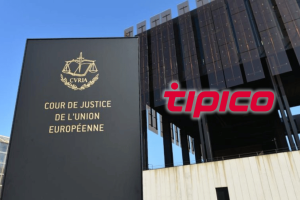
In Germany, a significant court case is unfolding, and it is one that has great significance for the iGaming market in the country and the entire European Union (EU).
The case is C-530/24, DK v Tipico Co. Ltd, which centers on a claim for recovery of gambling losses.
The premise of the lawsuit is that if often must refund bets placed between 2013 and 2020, if the operator holds a license issued in Malta but is not a German one.
Specifically, it relates to the compatibility of German gambling laws with wider EU regulations, and in particular, the working under Article 56 of the Treaty of the Functioning of the European Union (TFEU).
Why DK v Tipico tested EU gambling law
After the plaintiff, DK, incurred losses over a seven-year period, Tipico was sued in the German courts with an initial lawsuit alleging that the contracts were invalid due to the lack of a German license.
Tipico’s answer is that the German regulatory framework is extremely strict, restrictive, and incompatible with EU law.
This creates ongoing disruption and triggers a fraught legal uncertainty for many cross-border operators in Europe.
“If the CJEU concludes that the contracts remain void regardless of the defects in the licensing system, it will strengthen the legal basis for player payment claims covering long periods before the current regulatory regime.” – German lawyer who spoke to ReadWrite on condition of anonymity.
The State Treaty on Gambling (2012) in Germany details that gambling contracts are considered void if the operator does not have a German license for conducting public gambling activities.
The law is designed to protect consumers and users from gambling harm, as well as act as a bulwark against black market operators.
Conversely, another reason is that sports betting licenses are limited to 20 under an effective monopoly, but the licensing process has flaws.
No licenses were issued between 2012 and 2020 due to delays in the award process, which inadvertently created a barrier to new entrants, including EU-based operators such as Tipico.
this week, Tipico is welcomed by the European Gaming and Betting Association (EGBA), as it has become a new member.
What a CJEU decision could mean for operators
the German case went to the Federal Court of Justice of the country, but that authority deferred the dispute to the Court of Justice of the European Union (CJEU), which asked for an explanation, supplemented by questions related to the case.
C-530/24, DK v Tipico Co. Ltd, is shaping up to be a landmark case among other similar refund claims in Germany, and one that could set a huge precedent with far-reaching consequences for the industry.
A German lawyer familiar with the situation told ReadWrite: “From the perspective of potential outcomes, the outcome is significant not only for Tipico but for the wider market.
“If the CJEU concludes that the contracts remain void regardless of the defects in the licensing system, it will strengthen the legal basis for player payment claims covering long periods before the current regulatory regime.
“This will significantly increase exposure to civil liability and likely facilitate ongoing mass litigation before German courts.”
Our source went on to detail that if the EU Justice Court rules that EU law prohibits “such nullity where the licensing procedure violates EU principles, it will weaken restitution claims based solely on the loss of a license.”
That can shift the focus and legal responsibility to the failure of state regulation rather than placing the responsibility on individual gambling operators who gain access to the market through available methods.
In total, the claims are said to be worth billions of euros, indicating a potential ‘game changer’ result for the German gambling eco-system.
In another, similar case, C-77/24, Wunner, the CJEU gave an important judgment which stipulates that claims for losses resulting from illegal online gambling are governed by the law of the Member State of residence of the player.
This is expected to have an effect on DK v Tipico.
Final judgment in DK v Tipico
In conclusion, the case is closely monitored in Germany by courts, operators, regulators, litigation funders, and compliance specialists.
It is widely understood that the decision will influence how German courts deal with the large number of pending cases and is likely to shape the limits of civil liability for market participation in history.
This highlights the problem that the gambling market is regulated under rules that are formally strict but procedurally inadequate, and the legal system is now being asked to decide who should face the consequences of that contradiction.
The answer from the CJEU in Luxembourg will be decisive for what happens next, with the Advocate General’s opinion expected in a few weeks, around early February.
This is the same AG involved in Wunner, but it will be a non-binding opinion, even if it is likely to influence the final judgment.
It is expected to be announced in the first half of the year, possibly later in the summer.
C-530/24, DK v Tipico Co. Ltd. remains pending without final judgment approaching.
Image credit: EPPO / Tipico
The post The number of online gambling in Germany is approaching the remarkable case of Tipico first appeared in ReadWrite.