itstargetnews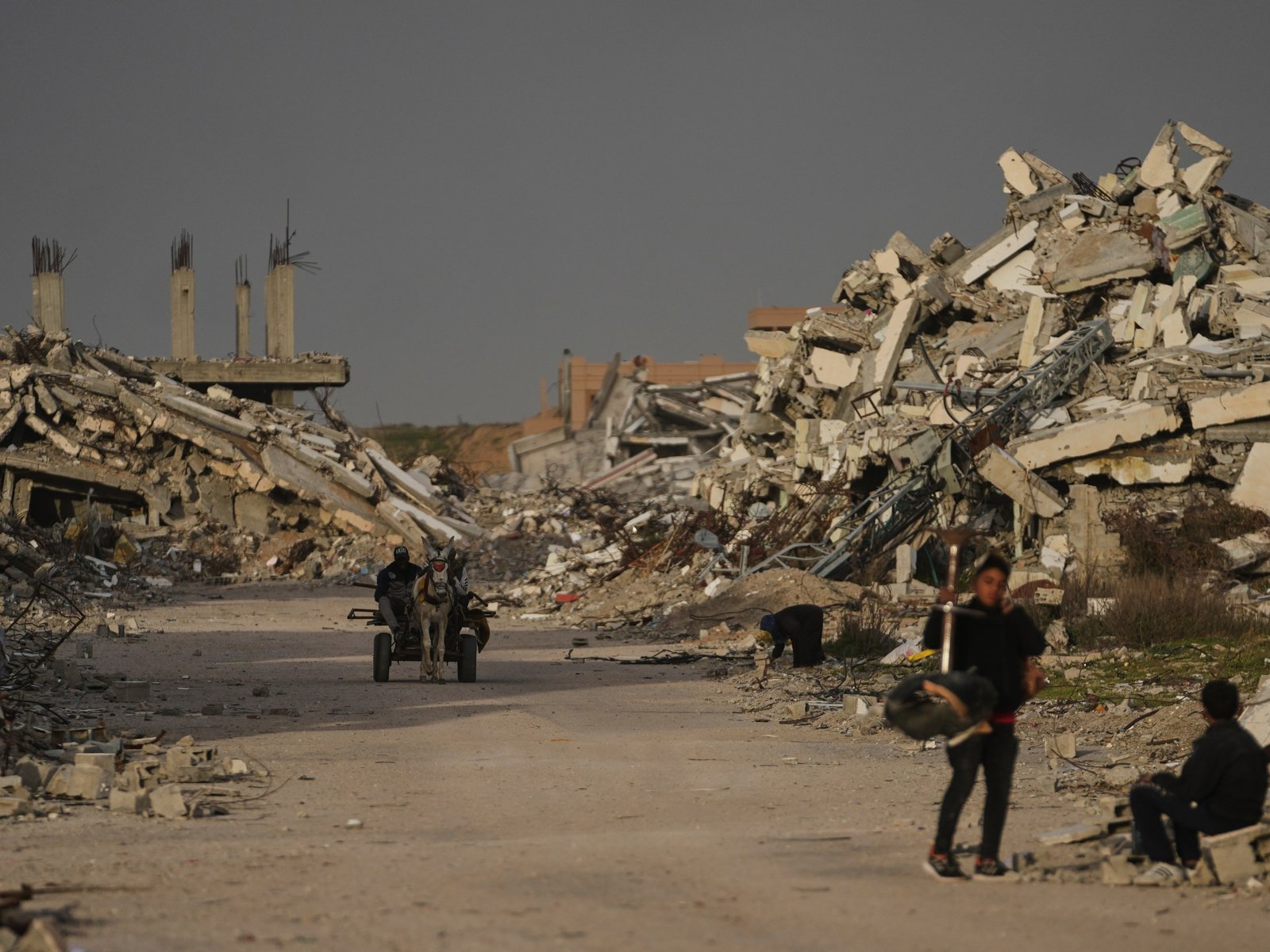
Gaza City – For many Palestinians in Gaza, making a living has become a daily struggle amid ongoing Israeli blockades, repeated ceasefire violations and the near-total collapse of the local economy.
As a result of Israel’s genocidal war on Gaza, infrastructure has been destroyed, productive sectors have been paralyzed, and traditional employment opportunities have all but disappeared, forcing residents to seek alternative, often precarious, means of survival.
Recommended Stories
3 item listend of list
Hala Mohammed al-Maghrabi, 24, is one of many young professionals whose education no longer offers them a path to stability. After graduating as a nurse in 2023, she volunteered in the healthcare field for two years, hoping the experience would eventually lead to paid employment. That opportunity never came.
“Volunteering doesn’t pay the bills,” Magrabi said. “With rising prices and no stable income, it has become impossible to rely on this job to meet basic needs.”
With limited prospects in Gaza’s overwhelmed health care system, she made the difficult decision to leave her field entirely.
Maghrabi turned to social media marketing and e-commerce, working online to earn a small income.
After graduating, she became a nurse and began training in a hospital, Maghrabi recalls. During that training, she also took several design courses and tried to find work in the field, but she was unable to reach clients and earn an income. She then decided to take a marketing course so that instead of waiting for others to market her work, she could market herself effectively. After gaining experience in marketing, she started working in e-commerce and digital marketing.
“This was not something I researched or planned,” she said. “Although the income is limited, it helps me cover daily expenses and survive in these conditions.”
economic crisis
Maghrabi’s experience reflects a broader phenomenon in Gaza, where years of complex crises have pushed unemployment to unprecedented levels. According to 2024 data from the Palestinian Central Bureau of Statistics, the overall unemployment rate in Gaza is 69%, with the unemployment rate among those aged 15 to 29 rising to approximately 80%.
About 70% of Gaza residents are under the age of 30, which means that most communities face severe economic challenges, and a significant number of young people have university degrees but cannot find suitable jobs.
Gaza’s GDP has also shrunk by more than 82% due to Israel’s ongoing war and destruction of economic infrastructure, and about 80% of the population relies on international aid due to food insecurity and loss of income sources.
The economic collapse has affected not only employees but business owners as well. Mohammed al-Hajj had previously worked in general trading and food supply, and his entire business model collapsed after the war.
“My warehouse and goods were destroyed and I can no longer afford the import fees or the required licenses,” Haji said. “Everything I had built up over the years was suddenly gone.”
Faced with few options, Haji looked for another way to earn an income. Since his neighbors were not severely damaged and he still has intermittent access to the internet, he converted part of his property into a small workspace with an internet connection.
“I created this place after having no other choice,” he said. “Students and engineers needed a stable place to take exams or work online, and this became a solution for them and me.”
Innovation for survival
As traditional employment structures collapse, innovation is no longer an option but a necessity. For some Palestinians in Gaza, finding unconventional solutions to personal crises has opened up new paths not only to survival but also to rebuilding economic activity.
Ahmed Fares Abu Zayed, chief executive of Abu Zayed General Trading, described how his company’s operations came to a standstill when the war began.
“We started the company before the war as a small power generation business with limited resources, designed to meet specific energy needs,” Abu Zayed said. “But after the war broke out, our operations stopped immediately due to a shortage of fuel for the generators. The situation was extremely difficult.”
Instead of shutting down completely, Abu Zayed began looking for alternatives. The result is an innovative method of energy production that relies on available materials rather than scarce fuels.
“We thought about how we could convert the waste around us into energy,” he said. “That’s how we started producing electricity systems using plastic waste as fuel. It was a difficult experience, but it was driven by creativity and necessity.”
His story illustrates how innovation in Gaza often arises directly from crisis, as individuals try to solve immediate problems with limited resources.
Mallam Alcala, project manager and business management expert, explained that such efforts play a vital role in Gaza’s labor market.
“The problem in Gaza is not a lack of talent, but a lack of an economic environment that can absorb talent,” Kara said. “Even small projects can stimulate markets by creating direct jobs and indirect service and production chains.”
She emphasized that innovation is now crucial. “When traditional jobs are missing, innovation becomes a means of creating opportunities rather than waiting for them,” she said.
Regarding the wider labor market, Kara concluded: “Lockdowns and wars have destroyed traditional work structures, forcing many young people to seek alternatives to traditional employment.”
exploitation and opportunity
Across Gaza, many young, educated people – doctors, engineers, nurses and graduates – are now selling bottled water, vegetables or second-hand clothes on the streets. These efforts are not entrepreneurial ambitions but survival strategies in a place where choice has all but disappeared.
As one young resident said, “We had no choice; all we could do was try to survive.”
While innovation opens new paths for some, desperation also creates space for exploitation. Mahmoud, a young man from Gaza, described how a lack of employment and social protection forces people to work in unfair or dangerous industries.
“Without government support and no safety net, it’s almost impossible to have a stable income,” Mahmoud said. “Some people turn to illegal or exploitative methods in order to survive.”
He explained that moneylending, currency trading and exploitative financial transfers have become increasingly common.
“People are sometimes forced to receive cash remittances at discounts of more than 50%,” he said. “This is clearly taking advantage of people’s desperate needs and shows how desperation can be abused.”
However, even amid these negative outcomes, examples of innovation that benefited the wider community persisted. Abu Zayed points out that his power project solves more than just his own problems.
“The big thing is it doesn’t just provide energy,” he said. “It has created employment opportunities for dozens of young people in manufacturing, installation and maintenance and provided them with skills they would not otherwise have access to in the traditional job market.”
“Even in the most difficult situations,” he adds, “a small idea can be turned into a sustainable project that supports the community and restores a sense of productivity.”