itstargetnews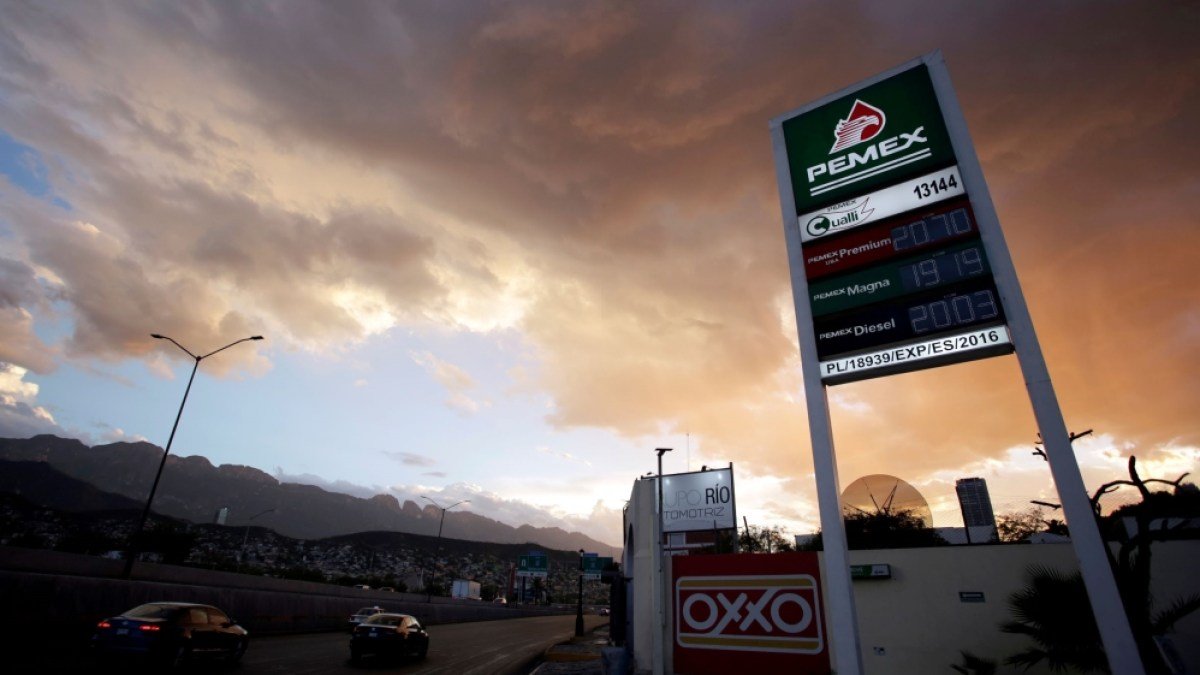
Monterrey, Mexico: Dagoberto Ramos has worked for more than 30 years at Mexico’s state-owned oil company Pemex’s petrochemical complex in the energy center of Coatzacoalcos in the state of Veracruz.
Ten years ago, the ethylene production expert chose to retire early because he feared deteriorating maintenance work would put him at risk of injury and liability. He is particularly concerned about being blamed for accidents caused by infrastructure negligence.
Recommended Stories
4 item listend of list
“Previously, production plants required maintenance for a month, but this has gradually been reduced to 20 days and sometimes even 15 days, with only the most urgent tasks prioritized,” he said.
“The risk of potential disaster for workers and the surrounding community is very real.”
On April 20, 2016, less than a year after Ramos left, an explosion rocked the Pajaritos complex where he had worked before moving to the Morelos complex five kilometers away. The incident killed 32 people and injured more than 130 workers.
For years, Pemex has been responsible for soil contamination, rising methane emissions and pipeline leaks, with long-term spills affecting local communities and marine fauna. The lack of infrastructure maintenance has become even more acute as the state-owned giant faces severe financial and operational constraints and a massive debt burden.
Over the past two decades, Pemex has struggled to boost production as mature oil fields decline, while saddled with $100 billion in debt and failing to attract private investment. There are growing concerns about the oil company’s sustainability and the future of Mexico’s energy industry amid regional changes, financial instability and heavy reliance on U.S. imports.
Despite being a crude oil producer, Mexico still relies on refined oil and natural gas imports from the United States. Mariana Castaneda, director of public affairs consultancy Grupo Estrategia Politica, told Al Jazeera that domestic fuel production currently falls 21% short of demand. Even with most refineries at or near maximum capacity, the gap is expected to widen, she said.
Rafael Vaquera Salazar, a professor at the Technical University of Monterrey (TEC), told Al Jazeera that despite the country’s vast reserves and long history of extraction, recovery prospects remain bleak.
Now there is a new challenge.
After the United States invaded Venezuela, kidnapping On January 3, the regional energy landscape became unstable under then-President Nicolas Maduro and his wife, complicating long-term planning.
While shifts in Venezuela’s oil industry could affect Mexico’s own production, the time frame and specific conditions remain uncertain, Vaquera said.
Crude oil from Venezuela and Mexico is heavy, and U.S. Gulf Coast refineries are specifically equipped to process this type of oil. “There may be a competitive situation where whoever offers the biggest discounts will secure refining capacity,” he noted.
Pemex exports about 60% of its crude oil to the United States. Although imports from Venezuela are restricted by sanctions, imports are expected to increase as economic activity resumes.
While oil executives told U.S. President Donald Trump that major reforms are needed before committing to Venezuela, Exxon Mobil CEO Darren Woods called the market “Not investable”, which may not be the case.
In the oil industry, it doesn’t matter who you do business with. Wakra told Al Jazeera that it was important to ensure the safety and stability of investments. “If I have certainty and stability, I can invest,” he said. “Even if it means dealing with the devil.”
Aid to Cuba and a troubled state oil company
Since 2023, Mexico has been shipping oil to Cuba through Pemex subsidiary Gasolina Bienestar. Once sporadic, these shipments have become stable under the administration of Andres Manuel Lopez Obrador, who views them as humanitarian aid.
Between January and September 30 last year, Mexico shipped 17,200 barrels of crude oil and 2,000 barrels of refined products per day, according to a report filed with the U.S. Securities and Exchange Commission.
Mexican President Claudia Scheinbaum has also defended the oil shipments as humanitarian aid, but they continue to exacerbate tensions with the Trump administration.
On January 26, there were reports that Pemex had stopped shipping oil to Cuba due to escalating tensions. The next day, Sheinbaum refused to confirm or deny the reports, calling the move a “sovereign decision” by the national oil company.
Camila Acosta, an independent journalist in Havana, told Al Jazeera on January 15 that 60% of the island faced power outages. These are caused by fuel shortages and crumbling infrastructure, declining oil shipments, a long-standing U.S. embargo and the tactics of the Trump administration. Seizure of Venezuelan oil tanker.
“People are tired of having power outages, having to cook with firewood, not being able to keep their food refrigerated — or it spoiling — and running out of water because you can’t pump it without electricity,” she said.
Acosta said Mexico is now “a partner of the Cuban regime”lifelineJust as Trump promised in early January to stop Venezuelan oil shipments to Cuba. However, there are growing concerns that the crisis could become worse if Mexico stops oil shipments entirely.
“Pemex is in serious financial trouble, and given the public pressure, I don’t know how much longer they can keep these cargoes going to the island,” Acosta added.
After a series of reforms since 2013, the 2025 reforms under Sheinbaum will transform Pemex’s status from a “productive state-owned enterprise” to a “public state-owned enterprise.” This legal change puts the public interest ahead of economic profit.
Castaneda said the current government recognizes the need for private capital to guarantee Pemex’s financial viability without compromising national sovereignty.
“The goal is to ensure that sovereignty and Mexican oil remain in Mexican hands. But Pemex itself acknowledges that without private sector support and participation, it is almost impossible for Pemex to face challenges, including debt,” she added.
Despite official promises to speed up payments, Pemex still owes its suppliers some $30 billion. Castaneda said that while the government has been making payments, the amount is still insufficient compared to the total debt, although it does bring some reassurance to the market. The Ministry of Finance and Public Credit did not respond to Al Jazeera’s repeated requests for comment.
Ramos, a former worker, said the debt has severely impacted local businesses, such as those that provide maintenance, supply, technology and transportation services, which rely on the funds to stay afloat and pay their employees. He noted that in Coatzacoalcos, many residents are moving to cities such as Monterrey for work.
Pedro Aguirre, chief executive of Verifigas, a company that provides technology validation for Mexico’s energy industry, told Al Jazeera the government’s push for private capital fell short of expectations.
Mexico 2025 portfolio judicial reform – This has increased legal uncertainty – coupled with Pemex’s operational challenges and payment-related risks, making many companies reconsider.
Aguirre said the Mexican government provided nearly 400 billion pesos ($23 billion) to Pemex last year, more than double the approved amount, to stabilize its finances and enhance its reliability.
“The troubling question that remains is, how long will this deficit last?” Aguirre said. “In a few years, who will make the decision and say enough is enough.”
In 2026, Pemex’s budget will increase by 7.7%. Its strategy relies on boosting production to 1.8 million bpd from last year’s average of 1.6 million bpd and increasing domestic fuel processing at its Dos Bocas and Deer Park refineries to reduce imports. The Energy Department is not granting interviews at this time.
But the growing financial support also raises questions about which other key industries are being affected.
Castaneda said that despite government efforts to ensure that overall investment continues, sectors such as health, education and infrastructure have been reduced or ignored.
“It’s like a blanket, isn’t it? If you pull one side, the other side comes out,” Castaneda said. “In other words, if there’s more on one side, there’s going to be less on the other side.”
Pemex’s precarious financial situation is further strained by fuel theft, commonly known as Huachol. While criminal organizations have traditionally siphoned gasoline from pipelines, the practice has evolved into more complex schemes involving networks of organized crime, Mexican and U.S. companies, and corrupt officials. Fiscal fuel theft involves the misclassification of imported fuel to evade required taxes.
“Over the years, these networks have been importing diesel in particular but labeling it as lubricant or waste. This has created a financial shortfall. The state is not receiving the funds it should have received,” Wakra added.
Verifigas’ Aguirre said the country lost about $10 billion in 2025 to this illegal trade, leading to a huge deficit in public funds. He described it as an “increasingly sophisticated fraud” that exposed governance failures and had a direct impact on community safety, local market competition and Pemex’s economy.
While the U.S. and Mexican governments have sanctioned and arrested people involved in Huachicole’s finances, many in Mexico continue to call for senior politicians in Morena’s ruling party to be held accountable.
In September, Vice Admiral Manuel Roberto Farias Laguna, a relative of the former navy secretary, was arrested along with other businessmen and public officials on suspicion of involvement in organized crime and fuel smuggling. He is the highest-ranking official detained so far in connection with these investigations.
For Vaquera, the issue isn’t money, but how to use the funds. He warned that it could be used to plant handpicked candidates in elections, influence authorities or facilitate money laundering.
“The question is who keeps the money and what political power they gain by having that money or economic power,” he said.