itstargetnews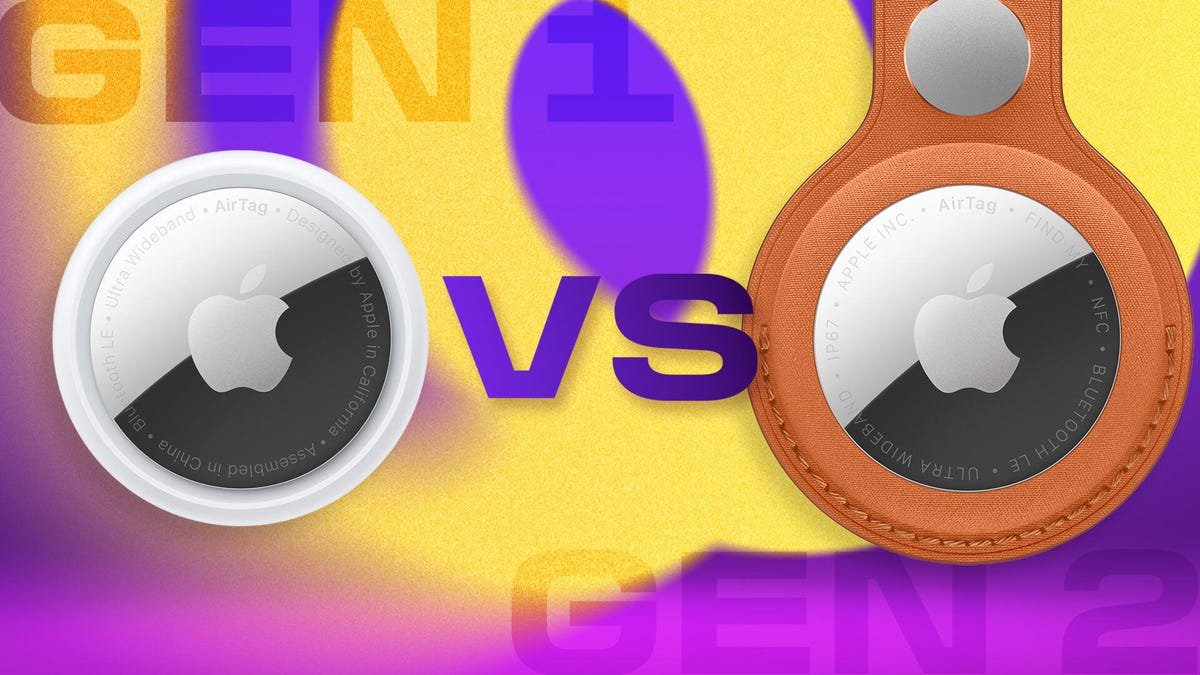
When Apple upgrades its hardware, the differences are usually clear: things like better iPhone cameras, more laptop storage or higher quality screens. But Apple recently introduced a new version of the popular AirTag tracker that looks and seems to behave similarly to those that are probably in one of your bags right now. However, there are some key differences in this second-generation AirTag (which Apple technically doesn’t call AirTag 2) that we’re here to drill down on.
How much do AirTags cost?
The retail price of an AirTag is $29 or $99 for a pack of four. That’s been consistent since the original AirTags were introduced in 2021. However, unless you’re buying directly from Apple, you’ll likely find them at discounted prices, typically around $24 for a single AirTag and $75 for a four-pack.
For now, it looks like Apple and retailers will stick with second-generation AirTags at their retail prices. However, the first generation AirTags were sold for less $70 for a four packwhich brings the per-tag cost to $17.50.
We don’t know how much existing first-generation AirTag inventory is out there, so pricing will continue for a while. It’s also likely that once the second-generation AirTags hit the market, they’ll also be discounted by third-party sellers.
Do the new AirTags (2nd generation) look different?
For the most part, a second-generation AirTag is identical to the first-generation model, from the white plastic exterior to the shiny aluminum backplate. There is a slight difference in weight: 11 grams (original) compared to 11.8 grams (2nd-gen).
They are both powered by a CR2032 coin cell battery, which is easy to find and cheap. In my experience, the battery lasts about a year before it needs to be replaced.
How do you distinguish AirTag generations?
Our first look at Apple’s new AirTag.
Since both generations of AirTags have the same design, you need to look for other signs to distinguish them. Turn it over and look at the writing around the edge of the metal disk: if it’s in all capital letters, it’s a new second generation AirTag. The new models also include “FIND MY” and “NFC” as well as “IP67,” the rating for water and dust resistance.
The first-gen AirTags text is written in sentence case (initial capital letter and then lowercase) and also has “Designed by Apple in California” and “Assembled in China.”
Finding Accuracy
The most important difference between AirTag generations is the presence of a second generation Ultra Wideband chip in the latest AirTag models. That locator chip is what communicates the tag’s location to nearby devices. This is also what enables Precision Finding, one of AirTag’s best features. Both generations have UWB chips — the second generation AirTag is the only one with an upgraded version.
Instead of just seeing that an AirTag is somewhere in your home, Precision Finding guides you to that exact spot until you’re literally right on top of it. Using the Find My app on your iPhone, finding a tag points you in its direction and estimates its distance.
Newer Apple Watch models can use Precision Finding to locate a second-generation AirTag.
However, you need to be close to any AirTag to detect it, which is where the advantage of the second generation comes in: the upgraded UWB chip extends its detection range by 1.5 times compared to the original AirTag. The practical advantage is that you don’t have to fumble around like trying to lock the tag’s signal before placing it.
Another benefit is Apple Watch compatibility with Precision Finding. The second-gen UWB of the new AirTags can Apple Watch Series 9 and later, as well as Ultra 2 model and later, to use the same pinpoint locator that iPhones have been able to since iPhone 11. Make sure you update to WatchOS 26.2.1 to turn on this feature.
Longer Bluetooth range
AirTags (second generation) have what Apple calls an “upgraded Bluetooth chip” that extends the range of the tag’s Bluetooth network. It is not clear which version of Bluetooth is being used; Apple lists it as Bluetooth LE (low energy) on the back of the AirTag.
The longer Bluetooth range helps in two ways. This makes it easy for the tag to securely and privately connect to nearby devices to register its location and status, and then share that with Apple’s Find My network.
For example, the reason you can see that your luggage has arrived at your airport when you land is not because the AirTag’s Bluetooth can reach the gate where the bags are unloaded (it can’t). This means that an iPhone belonging to someone on the plane or an airport employee picks up the AirTag signal and transmits it to the Find My network.
It also means that an AirTag can be more easily removed from your iPhone (which is great if someone tries to track you without your knowledge).
Louder speaker and new ringtone
Both generations of AirTag have a speaker for those times when it’s easier to find the tag by listening to its locator chime after you point it to play. It will also sound when the battery is low and when there is an unknown AirTag nearby. The second-gen AirTag speaker is louder than the first generation, which Apple says can be heard twice as far.
The new AirTag also uses a new recognizable hum that is easier to hear in noisy environments.