itstargetnews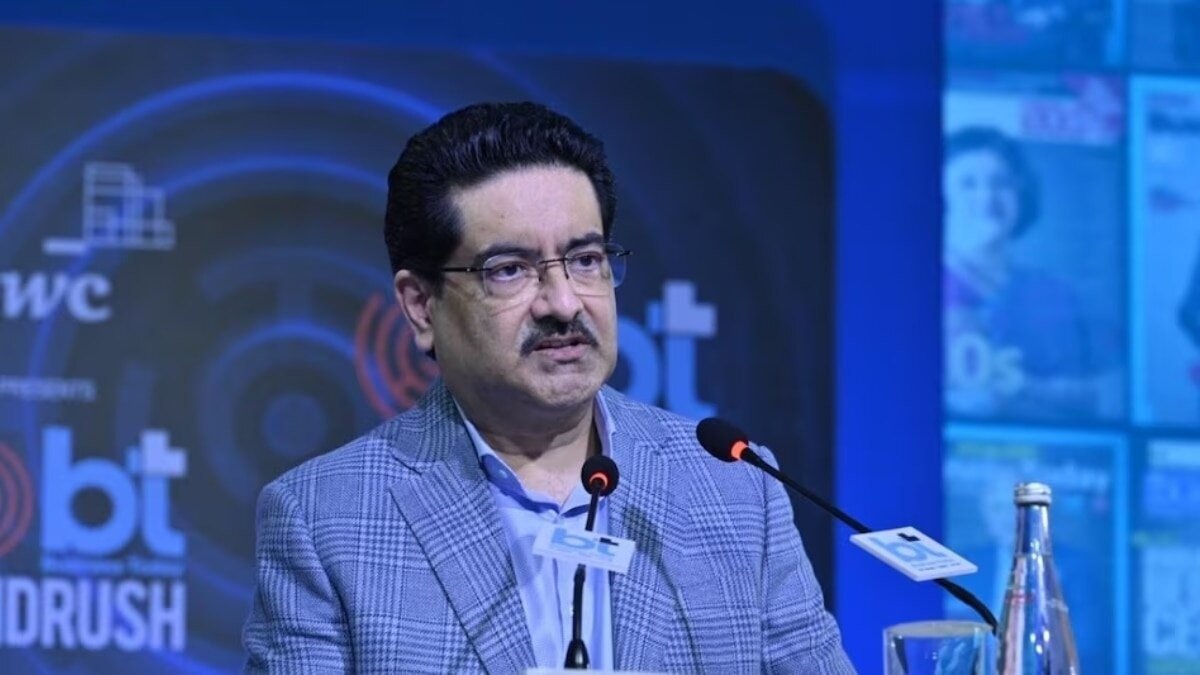
In his annual reflection note for 2025-2026, Aditya Birla Group Chairman Kumar Mangalam Birla offered a compelling reading of how geopolitics is reshaping business decisions and why businesses can no longer rely on stable alliances or predictable rules.
“We now operate in a geopolitical marketplace, where energy partners differ from technology allies and yesterday’s friends may not share tomorrow’s agenda,” Birla said, describing a global system increasingly driven by negotiated agreements rather than set frameworks.
Birla said the world remains a “U3 world: uncertain, unpredictable and unorthodox”, adding that “contracts between nation-states are being reworked” as diplomacy gives way to “crude realpolitik”. The defining change, he argued, is the rise of a global order based on deals, where outcomes are being shaped more by transactions than by rulebooks.
India as the ‘enduring constant’ in a changing global order
In the face of this volatility, Birla positioned India’s growth story as unusually stable.
“In an otherwise volatile world, India’s growth has become one of the few enduring constants,” he wrote, attributing it to the “steady mix of demographics, formalization, infrastructure and ambition.”
He said India’s scale and continuity are more important in this environment: “In an offer-driven world, scale, credibility and continuity are important, and India increasingly offers all three.”
UltraTech, loan expansion and the turn towards new consumer bets
Birla linked India’s infrastructure building to the group’s own expansion, pointing to a sharp increase in road construction over the past decade and the growth of UltraTech capacity alongside. He said UltraTech has grown from 60 million tonnes a year a decade ago to more than 190 million tonnes today, making it “the largest cement company by sales volume in the world, outside of China”.
He also highlighted the formal growth of credit to MSMEs and said the group’s NBFC loan book has expanded from about Rs 17,000 crore to nearly Rs 1.5 trillion in a decade.
Birla said India’s growth in consumption has expanded opportunities beyond traditional metros, helping the group scale multiple new bets in a short period. He pointed to launches that include Birla Opus in paints, Indriya in retail jewelery and Birla Pivot in B2B e-commerce, arguing that the past year validated both execution and ambition.
Vodafone Idea, AGR clarity and push for three private telecom players
Birla also addressed the group’s telecom joint venture, Vodafone Idea, and described the resolution of the AGR issue as a major turning point.
“Vodafone Idea’s experience underscores my belief that tough times don’t last. Tough companies do,” he said, adding that the operating environment “has fundamentally changed.”
“A healthy and competitive telecom industry is essential for India’s digital future. India deserves 3 private telecom players. India deserves a successful Vodafone idea. And this is, once again, an idea whose time has come,” he wrote.
Strategy must evolve with the context, says Birla
In a final reflection, Birla argued against static strategy in rapidly changing markets: “Strategy does not define the business; the business context defines the strategy.”
He cited Hindalco’s shifts between upstream and downstream priorities and said the group plans to deploy approximately $6 billion over five years in upstream aluminum and copper in India.
Birla ended with a larger message for business leaders navigating uncertainty: that resilience comes from organizational agility, accumulated goodwill, and the discipline to act before certainty arrives.