itstargetnews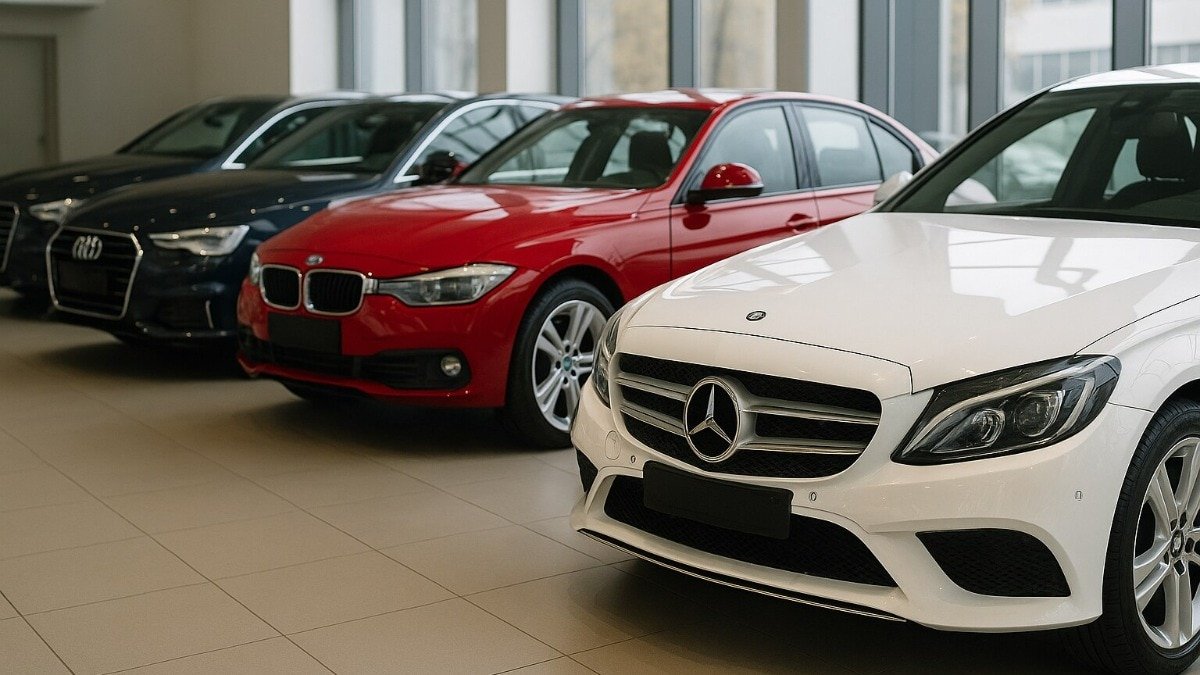
India and the European Union have finalized a landmark Free Trade Agreement (FTA) that is set to significantly reshape auto trade by drastically reducing tariffs on EU-made cars entering the Indian market. According to the pact, European import duties cars will be reduced from 110% to 10% for a quota of 250,000 vehicles per year, marking one of India’s largest tariff liberalizations in the automobile sector.
The deal comes at a crucial time for European carmakers, which are facing increasing pressure from higher US import tariffs and fierce price competition in China. India’s sharp cut in import duties offers welcome relief and opens up new opportunities for companies such as Volkswagen and Renault, which have been looking for growth markets beyond Europe. The tariff reduction represents the biggest opening to date of India’s heavily protected car market to EU manufacturers.
Implications
The deal is expected to have far-reaching implications for both European automakers and India’s fast-growing auto market, which is expected to reach annual sales of around 6 million units by 2030. India is already the world’s third-largest auto market by volume after the United States and China, but high import duties have historically limited the presence of manufacturing vehicles foreign India currently levies a 70 percent duty on imported passenger cars priced below $40,000, while vehicles above that threshold attract customs duties of up to 110 percent.
High rates
These high tariffs have acted as a significant barrier for European manufacturers, restricting their market share in a landscape dominated by domestic players and Japanese brands. Industry data shows that European car makers currently account for less than 3% of India’s car market. By contrast, Suzuki Motor and Indian manufacturers Tata Motors and Mahindra & Mahindra control about two-thirds of total sales. Popular and affordable models such as the Maruti Suzuki Wagon R continue to command volumes in the price-sensitive Indian market.
Analysts told Reuters that while the tariff cuts are significant, they only partially open the door. The benefits are expected to accrue mainly in the premium segment, as the reduced duties apply to a limited number of vehicles, particularly high-end models priced above €15,000 ($17,740). Mass-market cars, where price competition is fiercest, are unlikely to see immediate benefits from the deal.
“It’s a start. When we talk about exports from Europe, it’s only premium cars. For the volume sector it’s difficult,” said Stefan Bratzel of German auto research group CAM, who said Suzuki and Hyundai had better understood the market.
“India is all about cheap, reliable and stable cars. Volkswagen Group cars have been too expensive. Suzuki has benefited from the kei cars that are very popular in Japan.”
What does it change? India-EU FTA
The FTA takes a calibrated, quota-based approach to market opening. A press release outlining the deal said: “Car tariffs will gradually drop from 110% to 10% with a quota of 250,000 vehicles a year.” This TRQ mechanism is designed to balance increased market access for European manufacturers with safeguards for India’s domestic auto industry.
Welcoming the agreement, FADA President CS Vigneshwar described the India-EU FTA as a milestone for the industry. “The India-EU FTA is a milestone for the automotive sector and we are proud that FADA can contribute significantly to its formation,” he said. He added that the calibrated tariff glide path and guarantees closely mirror industry recommendations and noted that with more than 95% of European OEM sales already locally manufactured, the deal would strengthen the Make in India initiative, expand consumer choice and create reciprocal export opportunities for Indian automakers.
European car manufacturers in India
With limited production capacity and annual sales still in the tens of thousands, European automakers have substantial room to expand in India after steadily losing market share over the past decade. Industry data shows European brands account for less than 3 percent of India’s passenger vehicle market, which is dominated by Suzuki Motor and domestic players Tata Motors and Mahindra & Mahindra which together account for nearly two-thirds of total sales.
India, the world’s third-largest auto market after the United States and China, sells about 4.4 million vehicles annually. However, it has long been one of the most protected major auto markets, with import duties of 70 percent on cars priced under $40,000 and up to 110 percent on higher-priced vehicles.
Germany’s automotive association VDA highlighted the importance of the India-EU trade deal for the country’s export-oriented auto industry, with the CEOs of Volkswagen, Mercedes-Benz and BMW welcoming the deal. “This will lead to urgently needed better market access in an increasingly protectionist global environment, even if not all barriers are removed,” VDA President Hildegard Mueller said in a statement.
Volkswagen Group CEO Oliver Blume said the company would closely study the details of the deal, while Renault brand CEO Fabrice Cambolive indicated India would move up the list of strategic priorities for the automaker. “It will strengthen our willingness to invest in both continents because we are kind of an Indian and European company,” Cambolive said.
Although the tariff concessions apply only to conventional vehicles and exclude electric vehicles, reflecting India’s cautious approach to protecting its emerging electric vehicle ecosystem, the FTA is widely seen as a catalyst for new investment, greater competition and deeper integration between the Indian and European automotive industries. With India’s auto market expected to grow rapidly over the next decade, European automakers see the deal as an important foothold in one of the world’s most promising automotive markets.
(With inputs from Reuters)