itstargetnews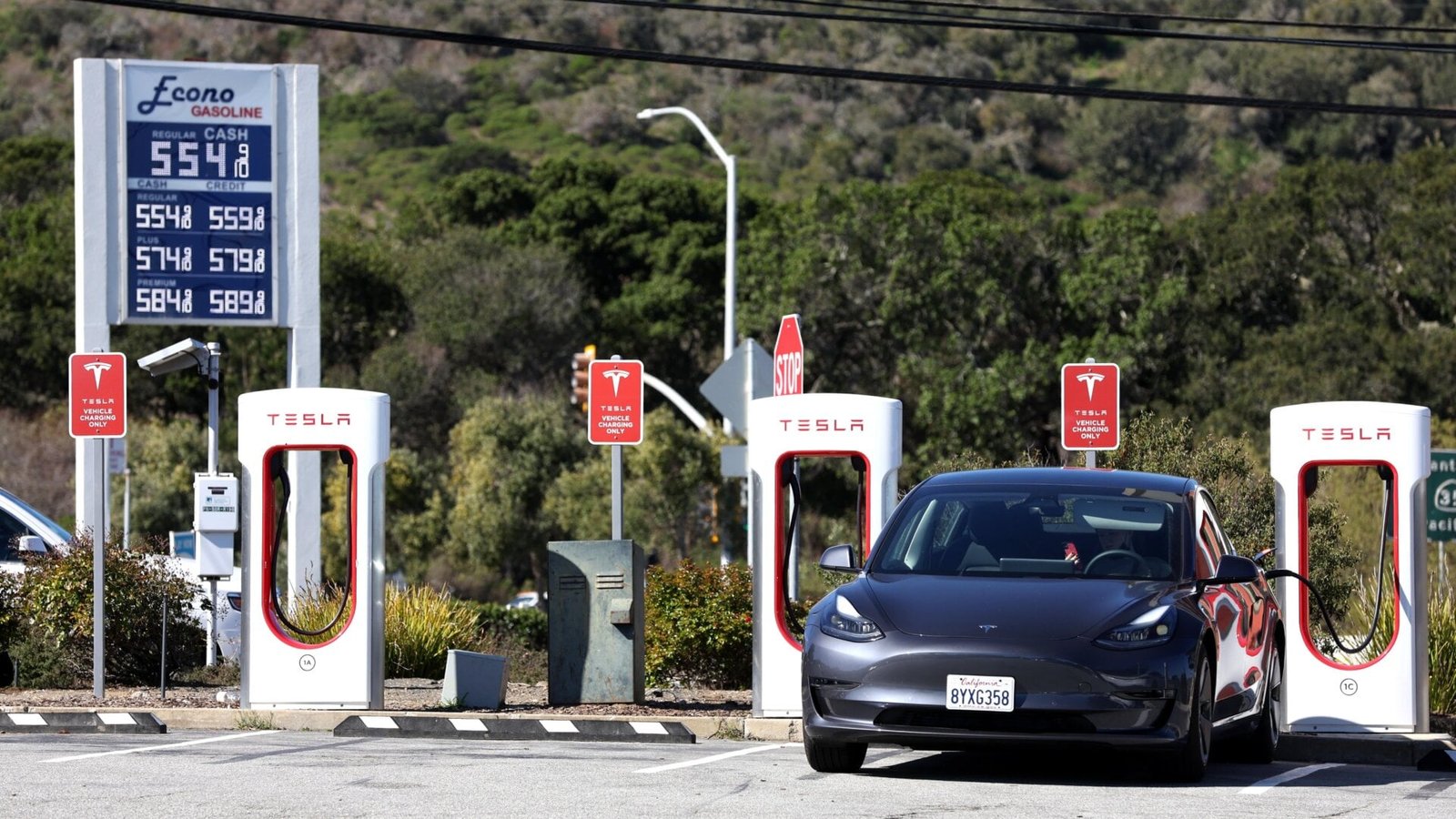

A multi-decade-long question that remains in hybrid and fully electric vehicles is how long the batteries last and how much they cost to replace. Many internal combustion engine car drivers like to brag about how their car has over 200,000 miles with “regular oil changes.” EV drivers don’t have much to worry about now according to a new study, but they could do better if they changed their charging habits.
EVs that use North America’s DC “fast-charging” public charging stations suffer nearly twice the rate of battery degradation than similar vehicles that charge less than 100 kW, according to a study by Geotabreleased this month. Geotab, which monitors the battery life of EVs, said its annual survey showed a 2.3% annual loss in the initial capacity between 21 models. Those using fast charging stations more than 12% per cycle show an average of 2.5% annual loss, twice as high as EVs that use DC charging less than 12% of the time.
It may be obvious to those who know that the higher the charging speed, the more difficult it is for an EV battery (as is common for electronic devices), but the Geotab study in 2025 shows that the rate of battery deterioration has increased from two years before when it was 1.8% per year. While the company admits it is testing a much larger and older pool, it has put the onus on increasing the use of fast DC charging among the growing EV population.
However, it’s not all bad news. Geotab concluded that EV batteries will last longer than initially expected and likely beyond the average life of a car on US roads, which was nearly 13 years last year, according to S&P Global.
“Our latest data shows that the batteries will last far beyond the replacement cycles planned for most fleets,” said Charlotte Argue, Senior Manager of Sustainable Mobility at Geotab. “What has changed is that charging behavior now plays a bigger role in how quickly batteries age, giving operators the opportunity to manage long-term risk through charging strategies.”
What this study reinforces is that public fast charging stations are ideal for long highway trips where charging from 10% to 80% is relatively easy to get back on the road. So many are built or planned where gas stations are or are attached to convenience stores like co-ops Mercedes-Benz and Buc-ee’s done in 2023.
And DC fast charging stations are more expensive than Level 2, especially home charging for some people. According to Stable.Autothe national average price of a Level 2 public charging station between July 2024 and July 2025 is 25 cents per kWh compared to 47 cents for DC fast charging. Home billing averages just 18 cents per kWh.
Studies like Geotab show that Level 2 charging still serves a useful role in new public charging stations – malls, office parks, street parking come to mind – where drivers who are far from home and need a juice can power up generally more cheaply and extend battery life.