itstargetnews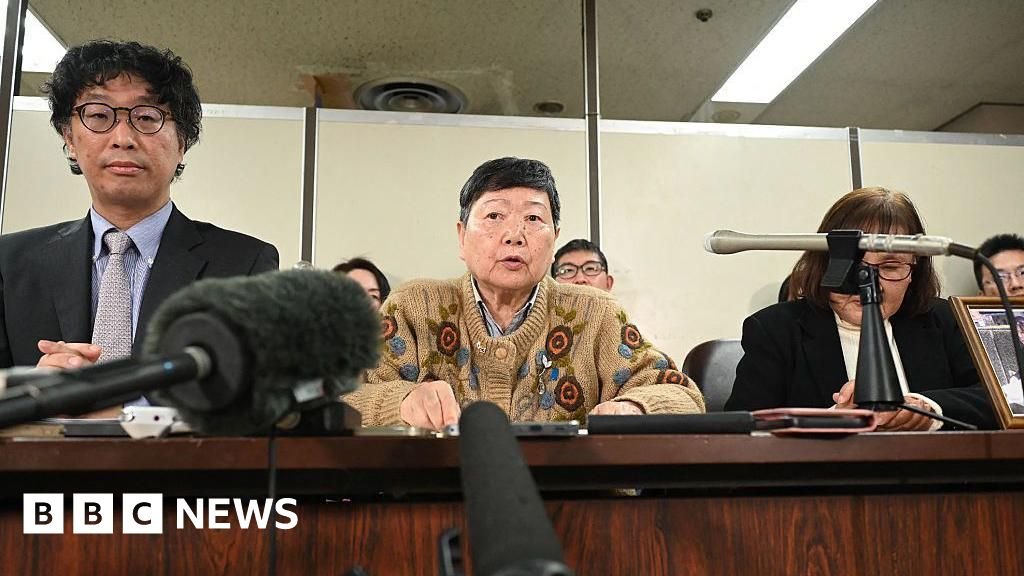
A Tokyo court has ordered Pyongyang to pay 88 million yen ($570,000; £416,000) to four people lured to North Korea decades ago by propaganda schemes.
The plaintiffs say North Korea marketed them as a “paradise on earth” but instead found themselves facing harsh conditions, including forced labor. They later escaped.
Monday’s ruling is largely symbolic, with no real means of enforcement: North Korea has ignored the lawsuit for years, and its leader Kim Jong Un has not responded to a Japanese court subpoena.
But the ruling came after a years-long legal battle in Japanese courts, with plaintiffs’ lawyers hailing it as “historic”.
According to Agence France-Presse, Shiraki Atsushi, the plaintiff’s attorney, said that this is “the first time that a Japanese court has exercised sovereignty over North Korea and acknowledged its inappropriate behavior.”
Between 1959 and 1984, more than 90,000 Zainichi Koreans (ethnic Koreans living in Japan) immigrated to North Korea under a resettlement program that promised a pastoral life with free health care, education, and work.
But survivors said they found themselves forced to work on farms and factories, restricted and unable to leave.
One of the plaintiffs, Eiko Kawasaki, traveled to North Korea in 1960 when she was 17 years old. She fled in 2003 and is now 83 years old.
She was one of five plaintiffs who filed a lawsuit in 2018 seeking damages. Two plaintiffs are now deceased, but one continues to be represented in the lawsuit by his family.
In 2022, the Tokyo District Court rejected their compensation request, saying that it did not fall within Japan’s jurisdiction and that the statute of limitations had expired.
But in 2023, the Tokyo High Court ruled that the case actually fell under Japan’s jurisdiction and found that North Korea had violated the plaintiff’s rights.
“It is not an exaggeration to say that much of their lives have been ruined by North Korea,” Judge Taiichi Kamino said in Monday’s ruling at the Tokyo District Court, The Associated Press reported.
Kenji Fukuda, another lawyer for the plaintiffs, acknowledged the significance of the ruling but said actually getting any funds from North Korea would be a “challenge.”