itstargetnews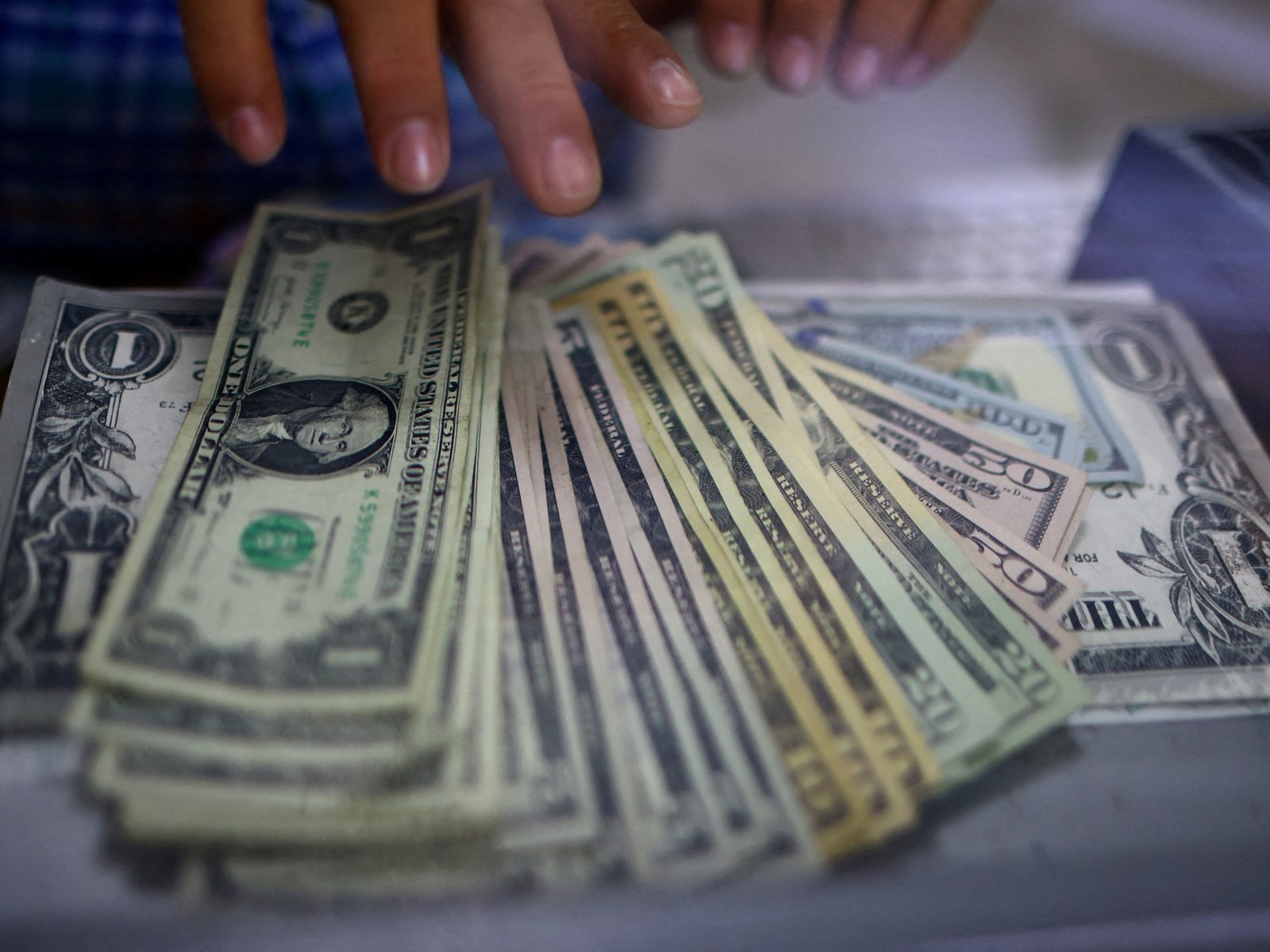
Johannesburg, South Africa – On a late-November morning, two days before leaders of the world’s major economies convene for the 2025 G20 summit in Johannesburg, the central bank governors of South Africa and China met just 20 minutes away in a hotel, setting in motion a system that many hope will help international trade escape the shadow of the dollar’s dominance.
On the same day, at a ceremony held at the South African Reserve Bank in Pretoria, Standard Bank, the largest bank in Africa by assets, became the first bank in Africa to directly connect to the China Cross-border Interbank Payment System (CIPS). This integration means African businesses can now settle with China directly in yuan, without using any intermediary currencies – notably the U.S. dollar (USD).
The US dollar has been the world’s main reserve currency since the end of World War II and is currently used in more than 80% of international trade.
But discussions about alternatives to the dollar have gained increasing traction in recent years, particularly in the global South and are spearheaded by the BRICS group of developing economies, of which South Africa is part and which counts Brazil, Russia, India and China as founding members. Egypt, Ethiopia, Indonesia, Iran and the United Arab Emirates have also joined in recent years.
Like South Africa, Brazil has also joined CIPS. At the same time, it is increasingly using the real and yuan to settle bilateral trade with China, such as in soybean sales, bypassing the dollar.
Other countries have also been favoring local currencies. India and the UAE trade in rupees and dirhams, while China and the UAE settle liquefied natural gas (LNG) trade in yuan. China already uses the yuan to trade with other countries including Argentina, Iraq and Saudi Arabia. China and Russia have dramatically shifted bilateral trade settlements toward local currencies, in part to bypass Western sanctions. China’s oil trade with Iran and Russia is mainly settled in RMB. India and Russia have increased the use of the ruble and rupee in bilateral trade.
As a group, the BRICS countries are also moving forward with their Bridge digital currency, which if successful would allow them to conduct transactions bypassing the U.S. dollar and the Society for Worldwide Interbank Financial Telecommunication (SWIFT). SWIFT, the messaging network used by banks to facilitate international payments, is heavily influenced by U.S. and European Union regulations. Although the bridge system is yet to be launched, a working model is expected to be presented during the BRICS summit in India this year.
For analysts, bilateral trade, which allows countries to set their own terms, has always been part of the international economy. Therefore, such efforts are not new or unexpected.
However, analysts say this is happening with increasing frequency as people become increasingly motivated to move away from complete reliance on the dollar.

“Hidden Costs” Beneficial to the United States
While the United States, as the world’s leading economy, has historically dominated global trade, that influence has waned over the past decade as China has taken the lead, especially in the Global South, which accounts for 85% of the world’s population and about 50% of its gross domestic product (GDP).
For example, China was the source of most of the continent’s imports in 2024, followed by the European Union, India and the United States, according to the United Nations Commodity Trade Statistics database. Therefore, conducting bilateral trade in local currencies or integrating CIPS makes economic sense, analysts said.
“Every time a transaction is made in dollars, there is a hidden cost that comes back to the United States,” said Sanusha Naidu, a foreign policy analyst at the Institute for Global Dialogue, a South African think tank.
Now, the analyst said, countries around the world are starting to ask: “Why do we have to pay this to the United States?”
Funds can now flow directly without having to convert the buyer’s local currency first to USD and then to the seller’s currency, with both parties potentially losing some revenue in the process.
But for Danny Bradlow, a professor at the Center for the Promotion of Scholarship at the University of Pretoria, there are challenges to trading in local currencies; these are less about what is possible and more about what is practical.
He said that while the two countries could trade in any currency of their choice, it was unclear whether each side wanted to store the other’s currency.
For example, if two countries that don’t trade much with each other, such as Botswana and Mexico, want to trade goods, it’s more practical to convert pula and pesos into dollars to trade with the dollars in demand than to keep large bids for each other.
Shirley Yu, managing director of ACME Macro Consulting and director of the China-Africa Program at the London School of Economics, said another challenge in bypassing the U.S. dollar is that “the infrastructure to support local currency trade settlement must first be established to ensure widespread adoption of local currency transactions.”
In addition to CIPS, she also mentioned BRICS Pay (a decentralized financial information and payment system designed for BRICS countries) and Project mBridge (a multi-central bank digital currency platform), which are all supported by blockchain technology. “The technology infrastructure itself enables countries to transact in local currencies without having to go through SWIFT or using dollars as a medium of exchange,” but these need to be established, she said.
Although the number of local currency transactions continues to increase, they still only account for a small portion of transactions via SWIFT and USD. For example, the RMB still accounts for less than 10% of global trade. Although other currencies such as the European currency are also used globally, Yu noted that “the renminbi is a larger trade settlement currency than the euro.”
“Incentives” for change
But what’s changed and grown significantly, said Bradlow of the University of Pretoria, is “the drive to change and develop alternatives” and “one of the ways you see that is the price of gold has risen so much”.
Countries no longer view the dollar as a fully stable reserve currency; instead, they are managing and hedging risks, Naidu said. She added that rising gold and silver prices point to declining trust in the U.S. dollar.
Chris Weafer, an investment analyst at Macro-Advisory, a strategic advisory firm focused on Eurasia, said political changes in the United States have contributed to the distrust.
“President (Donald) Trump’s lack of predictability and the massive U.S. debt mean the dollar is no longer as safe or predictable as it once was.” U.S. Treasuries currently exceed $38 trillion.
“But even without Trump, many people around the world – even in the West – would say the role of the dollar is a problem,” Bradlow said.
“Having a system that is so heavily dependent on the dollar means … being vulnerable to U.S. monetary and economic policy. Moving to a system that is somewhat more diversified or international but not controlled by one country will be more acceptable to everyone,” he said.
But does this mean the end of the dollar—or even the beginning of the end?
Most analysts still say no.
“The dollar will remain the global reference currency, for example when pricing oil or materials, and will become the main reserve currency for the world’s central banks,” Weaver said.
He said there was currently “no substitute for the dollar in terms of currency.”
But experts also say that alternatives to the dollar are not necessarily what the South and BRICS are seeking. What they want is diversification and alternative or additional trade settlement systems – ways to bypass SWIFT or the Western hegemonic system through which the United States has established dominance.
However, Weaver noted that even these alternatives “will still rely on the U.S. dollar as the reference currency.”
At the same time, the United States will do its best to protect the dominance of the dollar.
“President Trump wants to ensure the global dominance of the U.S. dollar through the Genius Act,” she noted, referring to the U.S. law that creates a framework for the issuance and regulation of U.S. dollar stablecoins. A stablecoin is a cryptocurrency that aims to maintain a stable value by being pegged to a reserve asset such as the U.S. dollar.
“The U.S. dollar is the foundation of U.S. national power and therefore national security. The U.S. dollar’s global dominance will be protected at all costs.”
Dollar falls ‘slowly’
While the dollar faces no real competition and will maintain its status, for Naidu, an international relations expert, the ongoing debate is about more than just the dollar’s “hard currency” value. It tells the story of the rise and fall of nations and how hegemony peaks and collapses after 70-80 years.
She said the U.S. dollar, like the U.S. empire itself, is a “wounded hegemon.”
When an overlord is injured and feels his dominance is challenged, “it can become very dangerous and unpredictable.”
Naidu said the four pillars of U.S. structural power – security, finance, knowledge and production – are all based on the dollar. As more countries become dollar risk-averse and alternative payment systems emerge, these pillars will be weakened.
So while the dollar won’t be suddenly replaced, it is experiencing a “slow burn” decline, she said, arguing that this is more dangerous and consequential than a rapid collapse.
While the world is still a long way from another currency being able to rival the U.S. dollar, if one emerges “over the long term,” many experts say it could be China next.
If countries lose confidence in the U.S. economy, political leadership and the U.S. dollar, “ultimately, the rise and greater use of the yuan will break the U.S. dollar’s global dominance,” especially in countries in the Global South, Weaver said.
Yu said that “the scale of de-dollarization in countries in the Global South will definitely expand,” especially given recent geopolitical events in Venezuela and U.S. tensions with Iran.
But she added that “there will be a quantum shift in the global monetary architecture when the petro-yuan replaces the petro-dollar,” referring to the yuan becoming the global oil pricing and settlement currency – a function currently performed by the U.S. dollar.
“This event, if it does occur, will mark the end of the dollar as the global central reserve currency,” Yu said, noting that China’s oil trade with Iran and Russia in the past few years has been conducted primarily in yuan.
Analysts believe that the most important thing is that there is no imminent or even medium-term threat to the US dollar, but this is not because the US dollar is performing well, but because international trade currently has basically no other options.