itstargetnews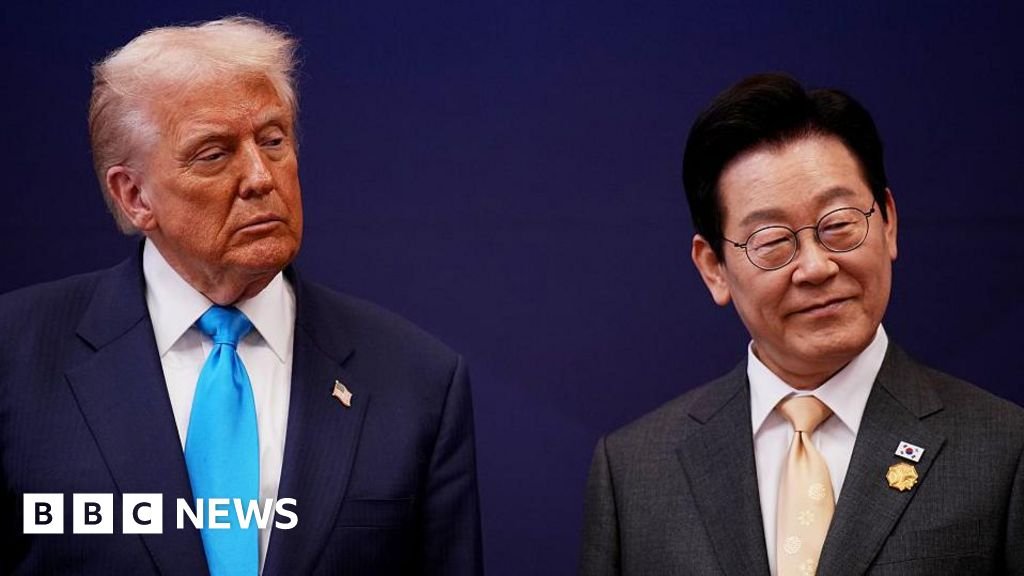
U.S. President Donald Trump announced he would raise tariffs on South Korean imports to 25% after accusing Seoul of “not living up to” a trade deal reached last year.
Trump said in a social media post that he would increase tariffs on a range of South Korean products from 15%, including cars, lumber, pharmaceuticals and “all other reciprocal tariffs.”
Trump said South Korean lawmakers were slow to approve the deal and “we have moved quickly to lower tariffs in line with the agreed-upon deal.”
South Korea said it had not yet received formal notification of the decision to increase tariffs on some goods and hoped to hold emergency talks with Washington on the matter.
The report also said that South Korean Industry Minister Kim Jong-kwan, who is currently in Canada, will visit Washington as soon as possible to meet with U.S. Commerce Secretary Howard Lutnick.
Seoul and Washington reached a deal last October that included South Korea’s commitment to invest $350bn (£256bn) in the US, part of which would be used for shipbuilding.
The following month, the two countries agreed that the United States would lower tariffs on certain products once South Korea started the process of ratifying the deal.
The agreement was submitted to the South Korean Congress on November 26 and is currently under review. According to local media reports, the bill is likely to be passed in February.
Duties are paid by the company importing the product. In this case, U.S. companies would pay a 25% tax on goods purchased from South Korea.
Trump frequently used tariffs as a lever to shape foreign policy during his second term in the White House.
On Saturday, he threatened Canada with 100 per cent tariffs if a trade deal with China was reached.
Chinese officials said on Monday that China’s “strategic partnership” agreement with Canada was not intended to undermine the interests of other countries.
Canadian Prime Minister Mark Carney says Canada will not seek a free trade deal with China and has “never” considered it.
He added that Canadian officials have made their position clear to their U.S. counterparts.
Earlier, Trump said he would impose import taxes on eight countries, including the United Kingdom, that oppose the U.S. plan to seize Greenland, an autonomous territory of the Kingdom of NATO member Denmark.
He later dropped his tariff threat on Greenland, saying progress was being made on a “future deal” for the island, but the incident has strained U.S. relations with Denmark and other NATO allies.