itstargetnews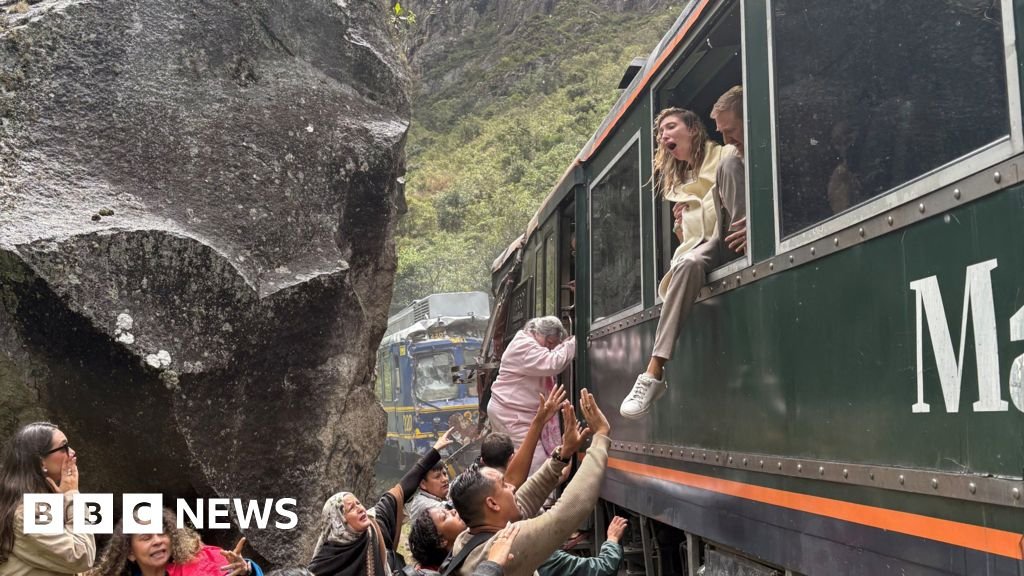

 Reuters
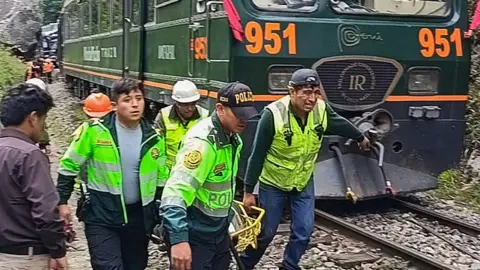
A passenger has described “chaos” after two trains collided head-on near Machu Picchu, Peru’s most popular tourist attraction.
Niels Honkoop, 33, told the BBC he had moved his seat from the middle of the train to the back before it crashed, injuring many people sitting in the front.
“I saw staff running around, people crying, people falling to the ground, chaos,” he said. “We got off the train and I saw people injured and bleeding.”
The accident occurred around 13:20 local time on Tuesday (18:20 GMT), killing a train driver and injuring at least 40 people.
Mr. Honcup said as the table in front of him broke in half. Broken glass was scattered on the carriage floor, and many injured people were lying in the aisles. He saw a woman trapped “between a bench and a table.”
He tried to help by carrying luggage and handing out painkillers because, coincidentally, “I had a wisdom tooth pulled out recently, so I had a lot of painkillers on me.”
 AFP via Getty Images
The British Foreign Office said it was “supporting a number of British nationals involved in the crash”, while the US Embassy in Peru said US citizens were injured.
Mr Honcup said another train arrived after the accident and provided medical assistance. He and his tour group were taken to a nearby village where they received food and medical care before being taken to a hotel.
The accident occurred on the track connecting Ollantaytambo station to Aguascalientes, the closest town to Machu Picchu. The journey between the two stations usually takes around 90 minutes.
The two trains involved in the accident are operated by PeruRail and Inca Rail respectively.
PeruRail said in a statement that “we deeply regret what happened,” adding that its staff “immediately” provided first aid to the train driver, conductor and passengers involved in the incident.
The cause of the accident has not yet been determined.
This comes amid an ongoing dispute between transport providers to the UNESCO World Heritage site, with local communities unhappy with what they say is an insufficient public tender process.
Trains and buses taking tourists to the ancient town are expensive and, with limited access, lucrative for operators.
The ancient Inca city of Machu Picchu was built in the 15th century and is located in the Peruvian Andes. It is one of the seven modern wonders of the world.
Visitors can reach the site by taking a series of trains and buses, or hiking along the Inca Trail with a registered tour operator.
In 2011, officials imposed daily limits on visitors to protect and preserve the site, but concerns about overtourism remain.