itstargetnews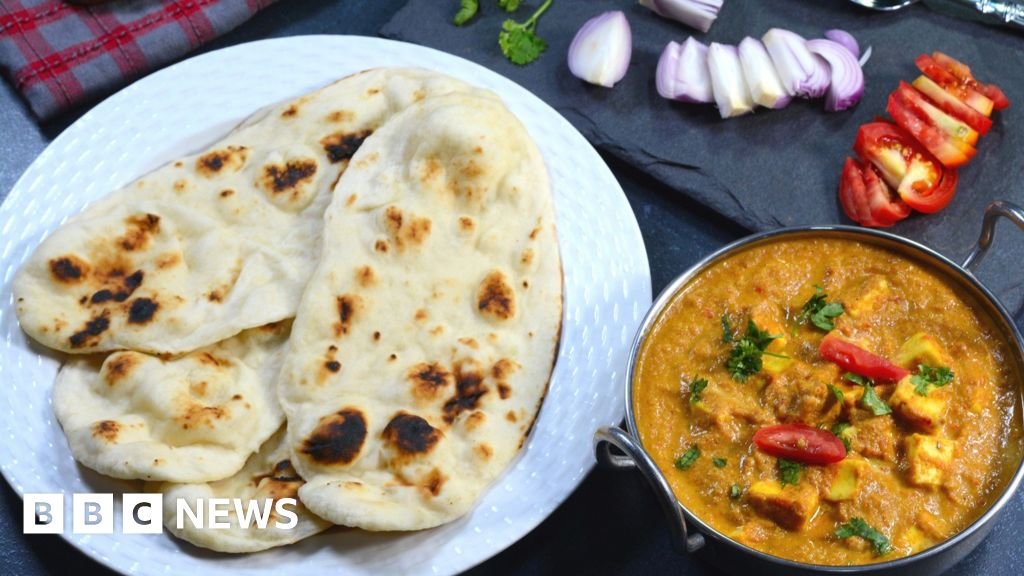

 Getty Images
Fluffy naan (a fermented flatbread popular in South Asia) paired with a rich, creamy chicken gravy is one of the region’s favorite comfort foods and one of the most popular Indian dishes abroad.
While the rich and aromatic gravy is often thought of as stealing the show, without its understated sidekick, it loses a lot of its charm.
The chewiness of the naan adds texture to every bite; its subtle flavor complements the spices and seasonings of the gravy. In fact, this versatile naan holds its own well and makes the main dish shine.
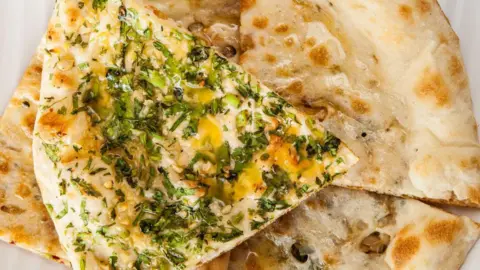
That’s probably why this flatbread is one of the most popular breads in the world. Most recently, Butter Garlic Naan—a flavor-packed take on traditional naan— Topped the Taste Atlas list of best breads.
It’s made by brushing butter onto piping hot naan bread and sprinkling it generously with chopped garlic. Also on the list is aloo naan – a naan made by filling potatoes with spices and coriander.
While naan and its variations are now ubiquitous in restaurants serving Indian or Middle Eastern cuisine, they were once served only in the courts of Islamic kings. So how did naan move from royal kitchens to our plates?
 metropolitan museum
The origins of naan are unclear, but many food historians believe that the flatbread originated in ancient Persia, as its name comes from the Persian word for “bread.” The Persians used water and flour to make bread, probably baked on hot pebbles.
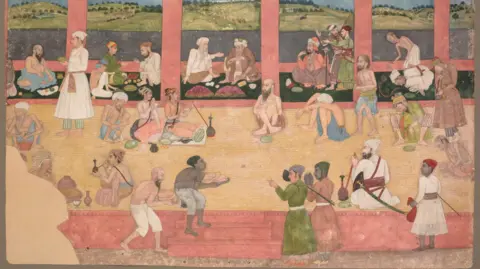
Naan traveled to the Indian subcontinent with the sultans who ruled much of the subcontinent from the 13th to 16th centuries. Muslim rulers brought culinary traditions from the West and Central Asia, including the use of tandoors (clay ovens) for cooking food.
Amir Khusrau was an Indo-Persian poet who documented court life during the reigns of Alauddin Khalji and Muhammad Bin Tughlaq, Two types of naan are mentioned In his writings – naan-e-tanuk and naan-i-tanuri.
The former is delicate and thin, while the latter is a thick, fluffy flatbread baked in a tandoor. During the Delhi Sultanate, naan was often served with different meat products such as kebabs (meat skewered over charcoal) and keema (minced meat).
 Getty Images
Chefs in the royal kitchens also advanced the art of naan making by introducing specialized kneading techniques and adding yeast (a rare ingredient at the time) to make the bread softer and fluffier. Due to the complicated and expensive production process, naan became a luxury food mainly enjoyed by the nobles.
This remained the norm during the reigns of subsequent Mughal emperors and continued for the next three centuries.
“Professional chefs known as naan bais made and experimented with the flatbread, using adjectives to emphasize their innovations. For example, naan-e-warqi is a thin, flaky flatbread, while naan-e-tangi is a smaller bread that absorbs meat juices well,” says Neha Vermani, a historian of South Asia.
Naans are also named after the home kitchens where they are made.
“Baqir Khani is a flatbread with a biscuit-like texture, so named because it was made in the kitchen of Baqir Najm Saini, a senior official in the court of Jahangir and Shah Jahan,” Ms. Vermani said.
 Getty Images
During the British rule, naan remained a food enjoyed by the elite, but it also spread to the West through British travelers. Back in India, naan found its way into colonial cuisine as it began to be paired with cured meats or sauces infused with local spices.
“But over time, the complex preparations gave way to simpler techniques and more basic naan preparation methods became available to the average person, as we see in most local restaurants today,” Ms Vermani said.
Today, naan is made by mixing flour, yogurt and yeast and kneading it into a soft dough. Let the dough rise, then divide into balls and pat into shapes with your hands. The naan is then placed in a very hot tandoor until it puffs up and develops brown spots. Brush lightly with butter or ghee before serving.
But the story of Nang doesn’t end here.
In the 1990s and 2000s, naan enjoyed a new wave of innovation as fine restaurants in India and abroad began experimenting with flatbreads. Chef Suvir Saran recalls how his restaurant in New York began adding spinach, gouda and mushrooms to naan.
“This is a way to spice up naan and make it more appealing to non-Indians while Indians can feel less guilty about eating traditional food abroad,” Mr Saran said.
 Cleveland Museum of Art, Andrew R. and Martha Holden Jennings Fund 1971
The trend spread like wildfire, and now restaurants around the world are serving experimental naans stuffed with a variety of foods.
“There is a restaurant in Goa that offers pork curry naan or butter chicken naan, while there is a restaurant in Hong Kong that offers truffle cheese naan,” Mr Saran said.
“Naan is India’s glorious culinary gift to the world,” he added.
Food historians may not entirely agree—naan also belongs among other South Asian and Middle Eastern cuisines—but its connection to India is deep and long-standing.
Mr. Saran said naan conveys a message about belonging and Indian identity.
“Nang tells a story of diversity; a story of harmonious coexistence of cross-cultural identities,” he said.
“It shows us that differences don’t necessarily cancel each other out when they can be celebrated together.”