itstargetnews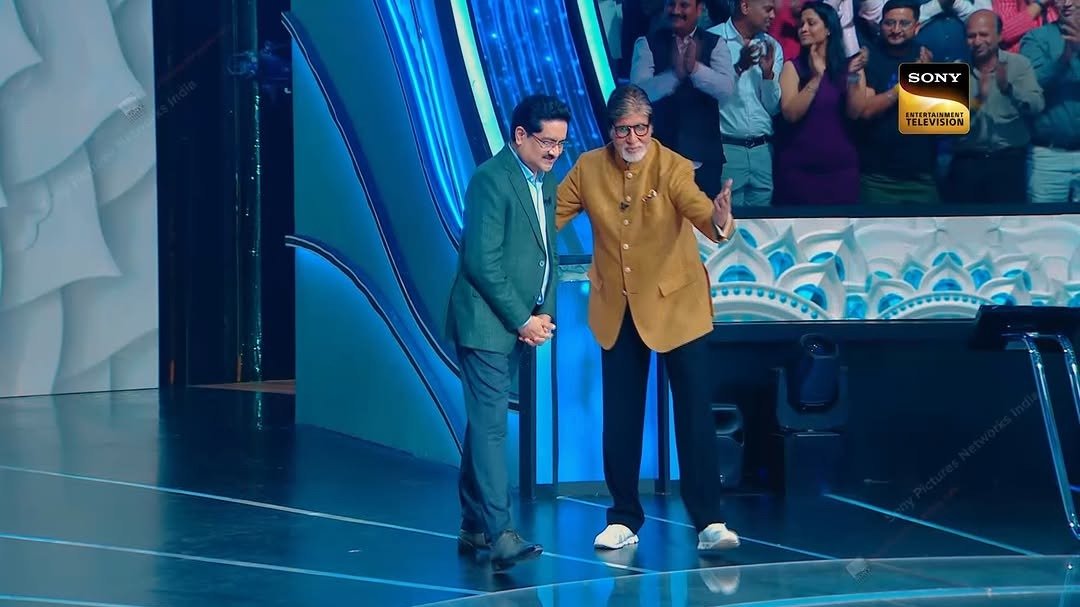
A rare television moment brought together boardroom wisdom and deeply personal reflection when Kumar Mangalam Birla, chairman of the Aditya Birla Group, appeared at Kaun Banega Crorepati to play Jaipur Foot. In conversation with megastar Amitabh Bachchan, Birla reflected on leadership, legacy and values, offering a set of lessons shaped by both family history and business experience.
The episode opened a window into the principles that guided Birla’s journey, starting with education and discipline. He recalled that he wanted to pursue an MBA after graduation, but said his father, Aditya Birla, insisted that he first qualify as an accountant. The message was non-negotiable: without becoming a CA, there would be no place for him in the office. Even an appeal to his grandfather, BK Birla did not change this stance, underscoring, as Birla pointed out, that professional credibility has no shortcuts.
The discussion then turned to memory and meaning beyond financial statements. Bachchan shared a personal memory of his visit to the Birla residence in Kolkata, where BK Birla showed him a guest book containing the signature of Bachchan’s father, Harivansh Rai Bachchan, from the 1950s. In a gesture rooted in respect for history, BK Birla asked Amitabh Bachchan to sign next to his father’s name, an exchange that highlighted how the family values relationships and legacy over material exposure.
Birla also spoke candidly about stepping into leadership at the age of 28, following the untimely death of his father. She admitted the fear and pressure that came with the responsibility and said she relied on her upbringing, family values and faith to navigate the transition.
Quoting a Sanskrit shloka, “shanaiah pantha shanaiah kantha,” he underscored the belief that meaningful achievements require time and constant effort, a principle he said has shaped his approach to building lasting institutions.
Simplicity emerged as another defining theme. Birla explained that he opened his grandfather’s closet after BK Birla’s death and found only 23 kurtas, two ties, three suits and a single watch. Despite presiding over extensive textile interests, the family patriarch lived on minimal personal property, often resisting new purchases for himself. That restriction, Birla said, remains a guiding light for the family.
The episode also offered rare glimpses into the private world of the Birlas. Birla’s younger daughter Advaitesha shared that while she was studying abroad, her father called her five times a day despite his demanding schedule. The family talked about bonding over painting and music, and his wife Neerja jokingly mentioned his habit of not listening the first time, prompting laughter in the studio. At his daughter’s request, Birla even sang a few lines of a classical song, revealing a side rarely seen in public.
Beyond personal stories, the conversation expanded to India’s place in the world. Birla told Bachchan that the country is living in the “age of India” (Bharat ka yug), reflecting on how, at the start of his career, he would not have imagined that India would become a bigger economy than Japan. He pointed to India’s status as the fastest growing large economy and described its demographic dividend as a “trump card”, noting that in five years the country will have a working population of one billion people.
Birla framed this drive as part of the “Indian Growth Model,” where rapid economic expansion coexists with the preservation of culture and values, a vision that Bachchan said the Birla family itself exemplifies. Birla summed up the moment with a clear message to the public: “There has never been a better time to be young, to be Indian and to be in India.”