itstargetnews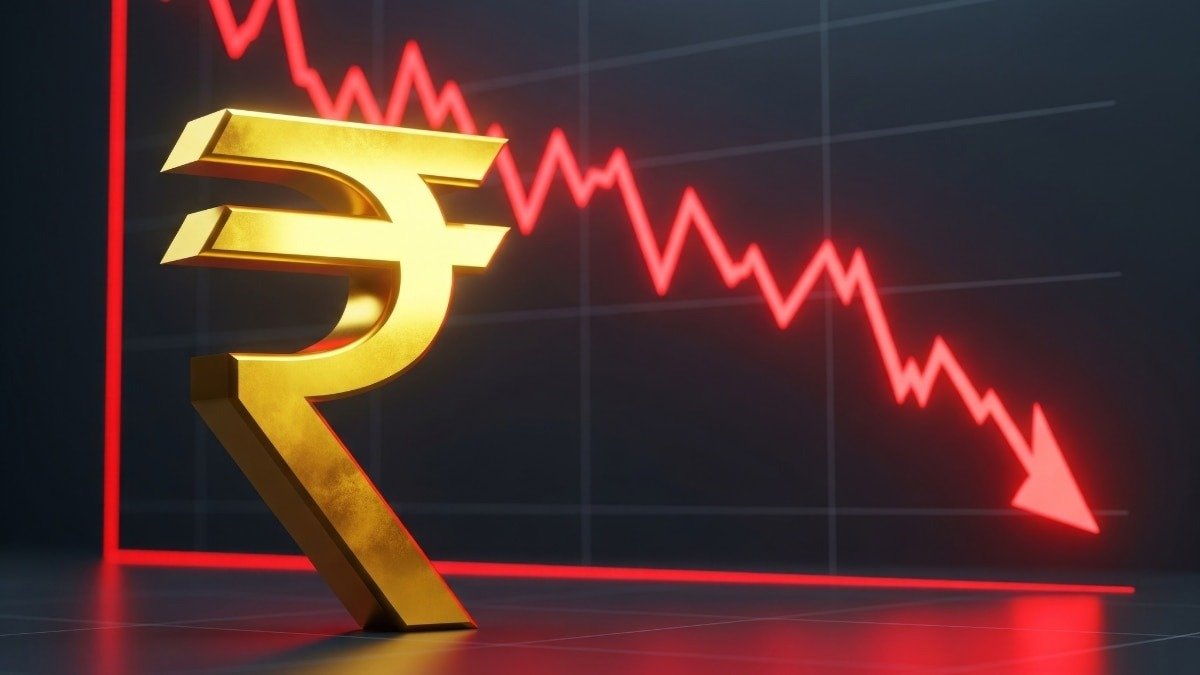
The Indian rupee’s rapid slide to successive record lows in recent weeks has analysts debating how much further the currency can depreciate. In its latest report titled ‘Rupee We Trust!’, SBI Research said the Indian currency is currently going through what it describes as Phase III depreciation, a period marked by the simultaneous weakness of both the rupee and the US dollar. Unlike previous cycles, this phase is driven less by domestic macroeconomic stress and more by increased global uncertainty, particularly geopolitical tensions and trade disruptions.
The report said that using a Markov regime-switching model, SBI Research estimates that the rupee will remain in a depreciating regime for about six months, after which it could appreciate by around 6.5%, potentially returning to 87 rupees to the dollar by 2026.
The Indian rupee breached the 91-per-dollar mark on Tuesday to hit an all-time low, before making a strong rally the following day. The currency traded at 90.3475 per US dollar on Wednesday, recovering from its previous close of 91.0275. Strong intervention by the Reserve Bank of India (RBI) triggered the rupee’s strongest intraday rally in seven months on December 17, sparking a prolonged period of weakness against the US dollar.
The national currency rose in early trade after sustained sales of dollars by state-owned banks, which are seen as acting on behalf of the central bank. This intervention helped curb volatility and restore stability to market sentiment. In percentage terms, the rupee gained 1.03%, its biggest one-day gain since May 23, 2025, when it had appreciated 1.05%.
Why is the rupee falling?
According to the analysis, the most important structural change affecting the rupee is the sharp decline in foreign portfolio inflows compared to the period before 2014. Between 2007 and 2014, net portfolio inflows averaged $162.8 billion annually, providing strong support for the currency. However, from 2015 to 2025, average inflows have fallen to $87.7 billion, shrinking the cushion that once absorbed global shocks. Foreign portfolio investor (FPI) outflows crossed the $10 billion mark in 2025 alone, putting sustained pressure on the rupee, particularly through equity markets.
Geopolitical developments remain the most important driver of recent currency movements. SBI Research observed a sharp rise in the geopolitical risk index in April 2025 after the US imposed a 50% tariff on Indian exports. Since the announcement of the tariffs, the rupee has depreciated by almost 5.7% against the dollar, the biggest decline among major global currencies during this period. While the geopolitical risk index has moderated since then, it remains well above its long-term average, indicating persistent pressure on the currency.
Demand for dollars
The report also highlights increased demand for dollars in the commercial segment of the foreign exchange market. Since July 2025, excess demand in the futures market has widened sharply as importers and exporters stepped up hedging amid uncertainty. Combined excess demand in the commercial market reached an unprecedented $145 billion, prompting intervention by the Reserve Bank of India (RBI).
The report also notes an unprecedented excess demand for dollars in the trading segment of the foreign exchange market, particularly in forward contracts, reflecting hedging behavior amid uncertainty. Combined excess demand reached $145 billion, prompting intermittent intervention by the Reserve Bank of India (RBI). The RBI is estimated to have sold nearly $30 billion in the foreign exchange market between June and October 2025 to curb excessive volatility, even as foreign reserves declined modestly.
Rupee at 87 in 2026?
Despite near-term weakness, SBI Research remains bullish on the medium-term outlook. Their Markov change analysis suggests that the rupee is likely to break out of the current depreciation regime after about six months. Historical patterns indicate that once this transition occurs, the currency tends to recover significantly. Based on this, the report projects a potential appreciation of around 6.5% by 2026, taking the rupee closer to the ₹87 level to the dollar, assuming geopolitical risks ease and capital flows stabilize.