itstargetnews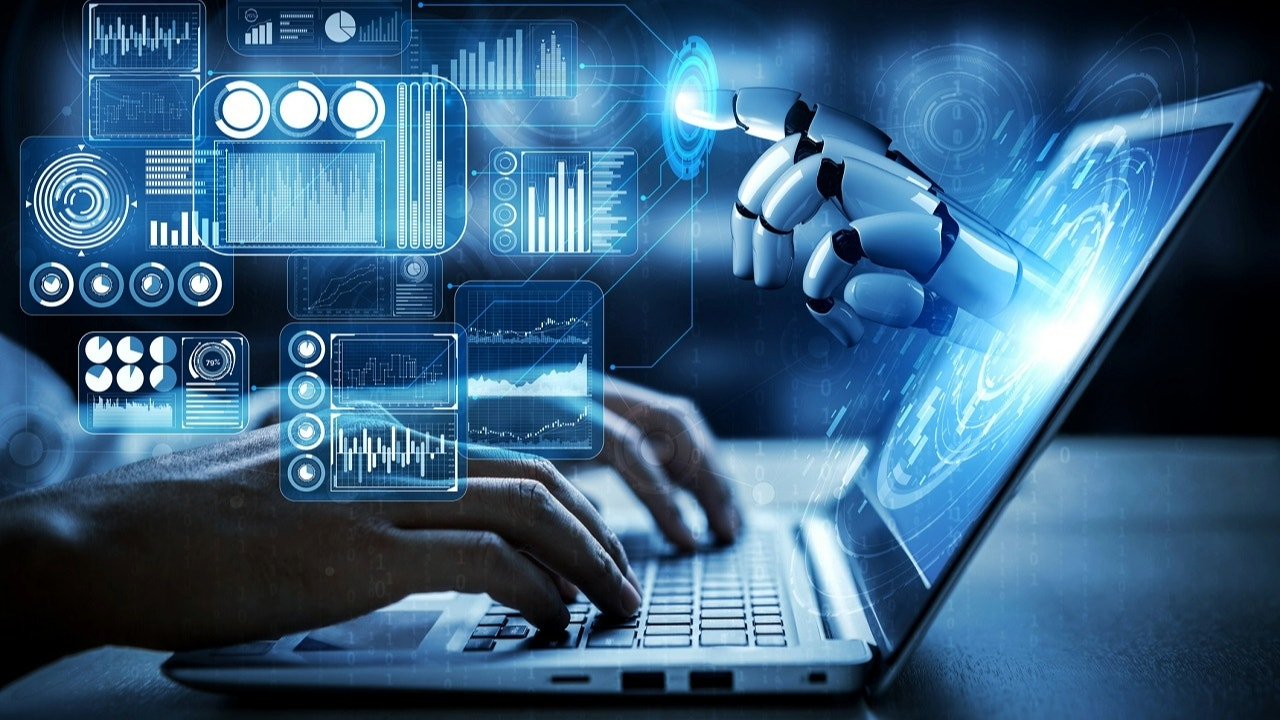
‘The Big Money Show’ assesses the impact of AI’s productivity boost on the labor market, as well as its application for workplace use.
Artificial intelligence (AI) enters a new phase in 2026, one that could reshape business operations, global competition and even which workers thrive, according to Goldman Sachs chief information officer Marco Argenti.
In an interview with FOX Business, Argenti laid out his top predictions for the coming year, saying 2025 marked a major turning point in The evolution of AI.
“We used to look at the models as a chat that would provide questions and answers,” Argenti said. “Now, a year later, we look at models as essentially entities or agents that can perform tasks on your behalf.”
DISNEY CEO DEFENDS MASSIVE AI DEAL, SAYS CREATORS WON’T BE THREATENED
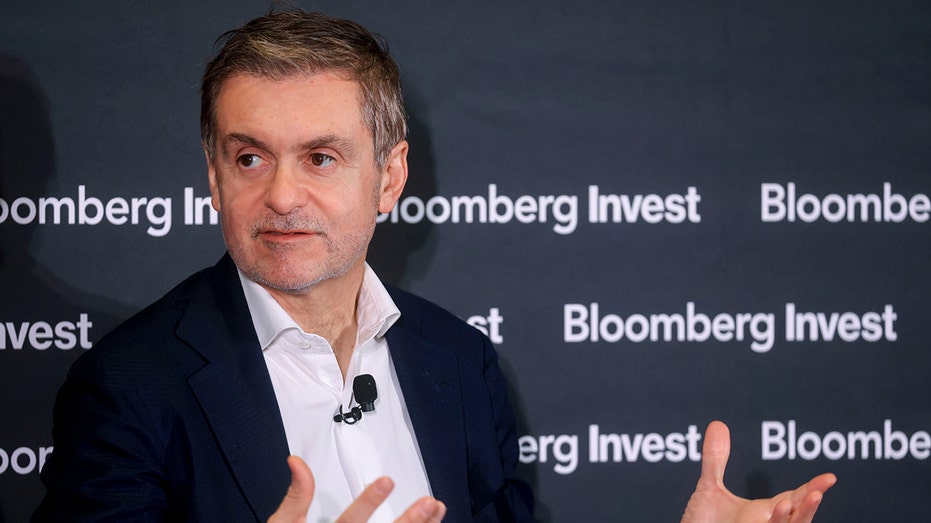
Marco Argenti, Chief Information Officer of Goldman Sachs Group Inc. (Michael Nagle/Bloomberg via Getty Images)
Here are his top predictions for the coming year:
The context of AI will be greatly expanded
Argenti predicts that one of the biggest leaps in 2026 will be AI models capable of handling much more context—the relevant background information that a system can remember and reason about.
“I think there’s going to be more and more research and more and more optimization … about how to enable models to reason and ingest much broader context,” he said.
Models will soon be able to reason between document libraries, long-running conversations and “everything you’ve read, everything you’ve written,” according to Argenti.
AI models will become the new operating systems
AI models will soon work as of a computer operating system and will be able to surf the Internet, access files and execute multi-step tasks, Argenti predicts.
“We’re going to start to see a shift in that traditional computing model, where the models are the new operating system,” he said. “So they’re going to have more and more capabilities to be able to give applications access to intelligence and access to tools.”
Users will simply give the AI a goal, similar to entering a destination in a navigation app, and the AI will take the steps to get there, according to Argenti.
“It’s basically like Waze or Maps where instead of saying, ‘Turn right,’ ‘turn left,’ you say, ‘I want to go to Boston,'” Argenti said. “And then the agent will figure out what the best roads are at the moment.”
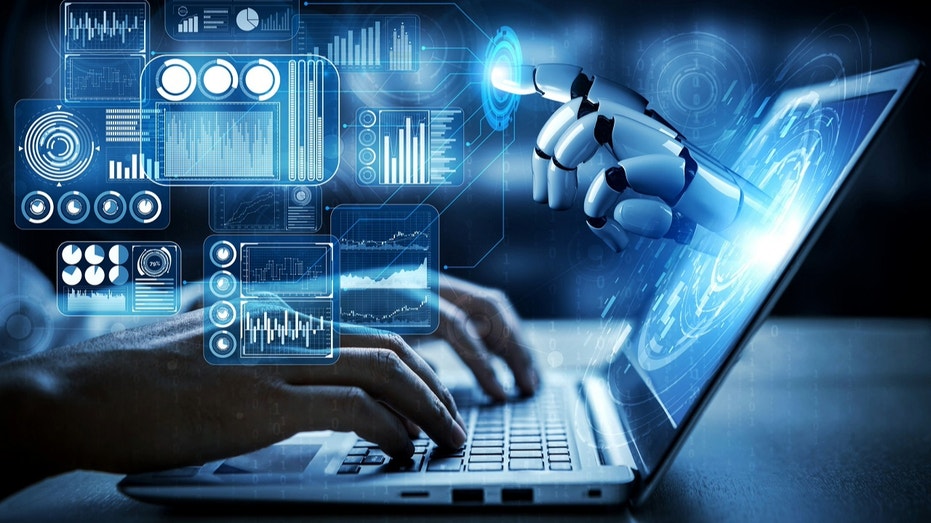
AI models will soon function like a computer’s operating system and be able to browse the Internet, access files and execute multi-step tasks, Argenti predicts. (iStock)
AUTOMOTIVE MANUFACTURER PREPARING FOR SELF-Driving FUTURE WITH NEW CHIP
Adaptability will become one of the main job skills
Argenti predicts that workers who thrive will be the most willing to adapt.
Companies will do this more and more prioritize employees who are “capable of having the curiosity to rethink their experience,” according to Argenti.
“If you’re an expert but want to stick to your old habits, you’re going to be less effective than someone who may be a little less expert but is willing to question their own everyday habits,” he said. “It’s a new world. It’s like going from no computers to computers … you have to learn to do things differently.”
Large sector associations will emerge
Argenti foresees the development of large-scale strategic partnerships in the AI sector.
“AI is going to be a game of scale, and there’s going to be a network effect of very large collaborations that are going to be formed,” Argenti said.
These “strategic alliances” will reshape the industry and create a winner-takes-all dynamic.
The AI race will intensify between the US and China
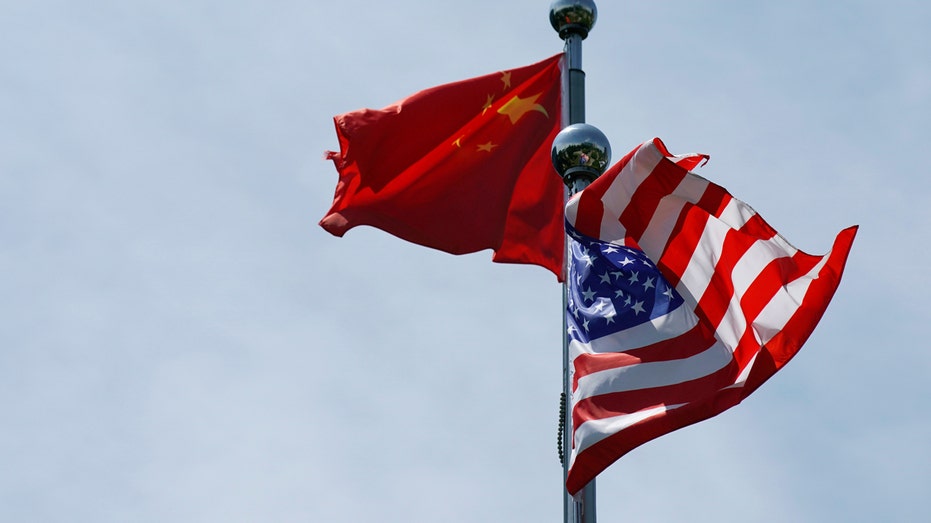
Argenti predicts that 2026 will intensify the global AI race. (Aly Song/Reuters)
Argenti predicts that 2026 will intensify the global AI race, which is increasingly focused on competition between the US and China.
“It will essentially be a tale of two nations in the geopolitical context between the US and China” he said. “I think they both have the potential to emerge as really powerful leaders at the frontier of the AI model with broadly comparable capabilities.”
While the US still leads the key benchmarks, he said “the gap is narrowing”.
Businesses Will Face ‘Sticker Clash’
Internal AI thinking can generate many more chips (or data AI model processing units) than users ever realize. As models become more capable and as companies continue to increase their use of AI, companies may begin to experience “token sticker shock,” says Argenti.
“In these models, you can see that they reason a lot … and during these minutes, the amount of chips is extraordinary,” Argenti said. “As these everyone-run AI pilots move into full-scale production, companies will face the reality of potential sticker-token shock.”
This will drive companies to focus on high-value use cases and more efficient models, according to Argenti.
“By 2026, many companies will put token optimization at the center of their AI strategy,” said Argenti.

Argenti also foresees the growth of “agent as a service,” in which companies can essentially rent the work done by AI agents. (iStock)
“Agent as a Service” will take off
Argenti also foresees the growth of “agent as a service,” in which companies can essentially rent the work done by AI agents.
he predict the companies can start using fleets of AI agents (specialized in coding, finance, customer service, design, and more) to augment its human staff.
“You could have all kinds of professions that will create a kind of ‘Agent as a Service’ or ‘AAS,’ instead of ‘Software as a Service,’ where the mental model changes from ‘I’m renting software’ to more like, ‘I’m renting work in the form of an agent,'” Argenti said.
Energy will “increasingly” become AI’s biggest obstacle
More than money, the real constraint to AI growth will be power, according to Argenti.
“I think it will increasingly be the sole determinant of scalability,” he said, noting the high demand and long timelines for building and upgrading energy infrastructure.
GET THE FOX BUSINESS ANYWHERE CLICK HERE
“The consumption and production of chips will exacerbate the need for power and energy, and I think that will get worse in 2026,” he said.